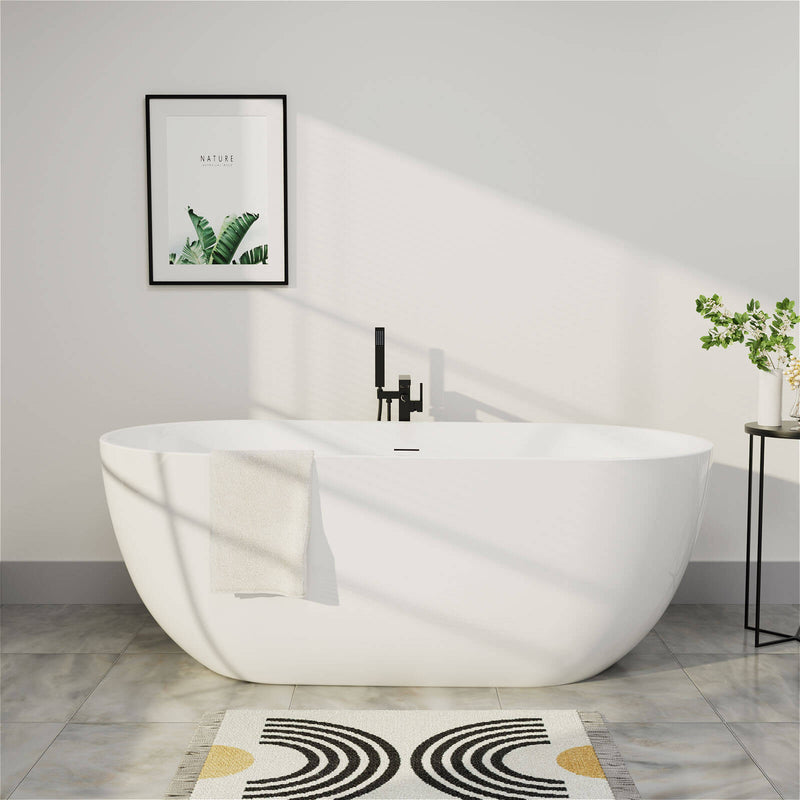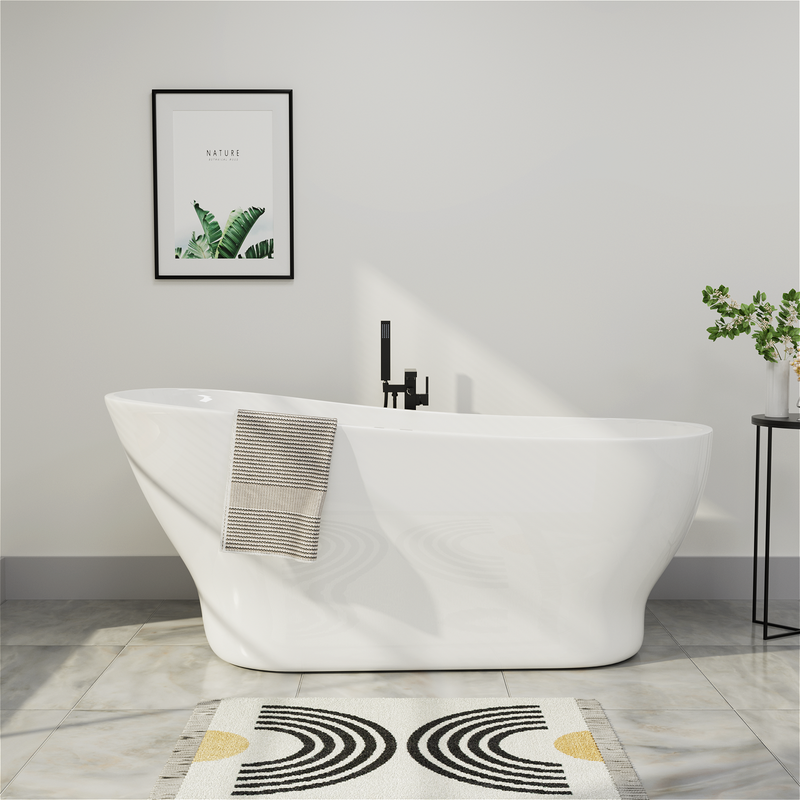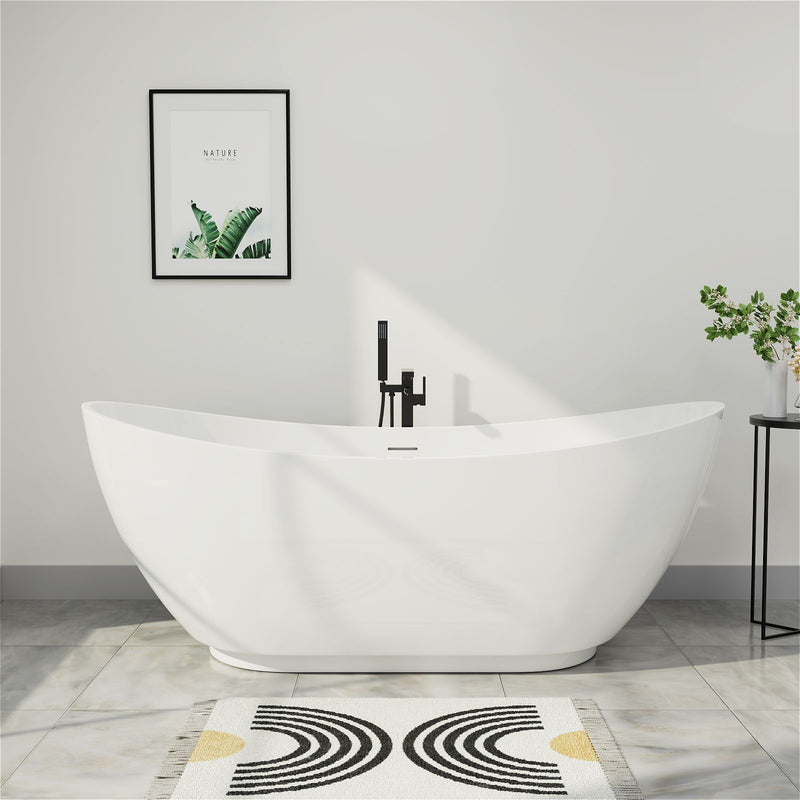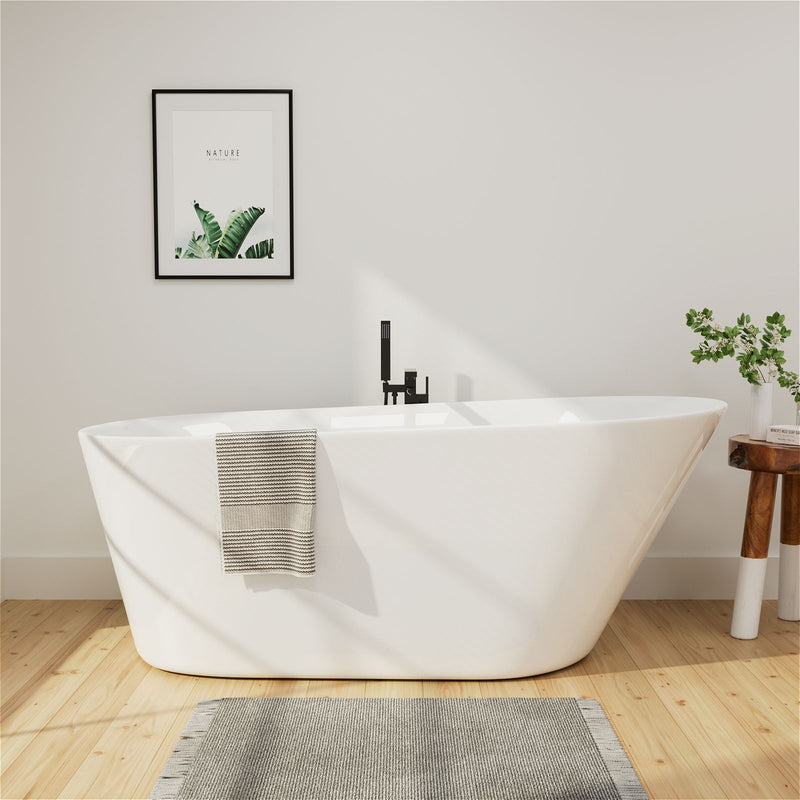
When shopping for a slipper tub, it's easy to focus on its graceful, high-backed silhouette and elegant style. However, the single most important factor for your daily enjoyment is one you can't easily see once it's installed: the water depth. A tub that's too shallow offers a disappointing puddle, while one that's improperly sized for your body can be uncomfortable or even difficult to use.
This guide moves beyond basic dimensions to explain what truly creates a deep, comfortable, and satisfying soak. We will break down how to measure for depth, how your body interacts with the tub's shape, and which material and installation factors ensure your slipper tub delivers the relaxing experience you're dreaming of.
Understanding True Soaking Depth: It's More Than a Number
A slipper tub's listed "depth" can be misleading. You must distinguish between the tub's interior depth and the actual water depth you will experience.
The interior depth is the vertical measurement from the very bottom of the tub's basin to the very top of its sidewall. However, you never fill a tub to the absolute brim. Two key features reduce the usable water level:
The Overflow Drain: This is a safety feature, usually a hole on the front interior wall, that prevents the tub from overfilling. The water level cannot rise above this point.
Body Displacement: When you get into the tub, your body displaces a significant volume of water, causing the level to rise. For a proper, immersive soak, you need to start with the water well below the overflow so it doesn't spill over when you enter.
The Practical Measurement: To find the true soaking depth, measure from the drain at the bottom to the bottom of the overflow drain hole. This is the maximum water depth possible. For a truly comfortable soak where you can submerge your shoulders without flooding the floor, look for a tub where this "fill-to-overflow" measurement is at least 18 to 22 inches. Many deeper soaking models, like some from Mokleba, are designed with this deep immersion in mind.
Matching the Tub to Your Body: The Key to Comfort
A perfectly deep tub is useless if you don't fit in it comfortably. Ergonomics are crucial.
Height and Reclining Position: Your height directly determines the ideal tub length. A common recommendation is that the tub should be at least 6-10 inches longer than your height when reclining. This allows you to stretch out fully without your knees being bent sharply or your feet pressing against the end. A person over 5'10" will likely need a tub at least 70 inches long to be comfortable.
The Slipper Back and Neck Support: The signature high back of a slipper tub is designed for reclining. Pay attention to its angle. A very steep slope may push your head forward uncomfortably, while a more gentle recline supports your neck and head. Some models feature a contoured "pillow" area at the top for added comfort. Consider how you like to sit in the bath—do you want to be fully reclined or more upright? The tub's back angle will determine this.
Seat and Legroom: The interior shape matters. Some oval slipper tubs have a gentle seat or a wider basin that provides more hip and legroom. A narrower, more traditional slipper shape offers a snugger fit. Think about your preferred bathing position and ensure the interior width accommodates it.
Material Matters for Heat and Feel
The material your slipper tub is made from has a major impact on soaking comfort, primarily through heat retention.
Acrylic: This is a very common material for modern slipper tubs. It is lightweight, warm to the touch initially, and allows for a variety of shapes. Its insulation properties are moderate. Water temperature will drop over time, but thicker, higher-quality acrylic (often reinforced with fiberglass) will retain heat better. It's a versatile and comfortable choice for most homes.
Cast Iron: The classic heavyweight. Enameled cast iron excels at heat retention. The dense material absorbs heat from the water and radiates it back, keeping your bath warm for the longest time. It feels solid and durable but is extremely heavy and requires significant floor support.
Stone Resin/Composite: This material, often used in luxury tubs, offers excellent heat retention—similar to or even better than cast iron—while being slightly lighter. It can be molded into ergonomic shapes and has a substantial, luxurious feel.
Stainless Steel: Known for a modern, sleek look, stainless steel also has very good heat retention properties. It feels cool to the touch initially but will quickly warm up with the water.
For the coziest, longest-lasting soak, prioritize materials with high heat retention like cast iron, stone resin, or quality stainless steel.
Safety and Practical Considerations
Comfort is also about safety and ease of use.
Entry and Exit: The very feature that allows for deep soaking—high sides—can make getting in and out a challenge. A tub height (the exterior measurement from floor to top of rim) of 24-30 inches is common. For many, this is a significant step over. Plan for secure grab bars mounted to wall studs and consider a sturdy bathtub step stool to make the process safer and easier. The floor around the tub must have a slip-resistant surface, a key safety standard for all bathing facilities.
Weight When Full: Always calculate the total weight. A large slipper tub can hold 70 gallons of water or more. Water weighs about 8.34 pounds per gallon. Add the weight of the tub itself (acrylic can be 100-300 lbs, cast iron 300-500 lbs) and the bather. This total weight—easily over 1,000 pounds—must be supported by your bathroom floor. This is a critical structural consideration, especially for upper-level bathrooms.
Faucet and Drain Placement: A freestanding slipper tub requires planning for water delivery. Will you use a floor-mounted freestanding faucet, a deck-mounted one on the tub's rim, or a wall-mounted filler? This decision must be made before installation, as each requires different plumbing rough-ins. Similarly, ensure the tub's drain location (left, right, or center) aligns with your existing drainpipe or that you are prepared for plumbing modifications.
Putting It All Together: A Step-by-Step Comfort Checklist
Before you make a final decision, walk through this list:
Measure Your Space and Access: Confirm the tub will fit in the bathroom and can be delivered through your doorways and halls.
Prioritize "Fill Depth": Do not settle for a tub with a fill-to-overflow depth of less than 18 inches if deep soaking is your goal.
Match Length to Your Height: Use the "6-10 inches longer than your height" rule as a minimum guide.
Consider the Bather's Mobility: If ease of entry is a concern, look for models with a slightly lower profile or integrated ledges.
Choose a Material for Heat: Decide if long heat retention (cast iron, stone resin) is worth the potential trade-offs in weight and cost versus the versatility of acrylic.
Get a Professional Opinion: Have a contractor verify your floor can support the loaded weight and discuss plumbing modification costs.
By focusing on the functional interaction between water depth, your body, and the tub's design, you will move beyond a simple decorative purchase to invest in a centerpiece that provides genuine, lasting comfort.
FAQs
Q: I'm tall. What should I look for in a slipper tub?
A: Focus on interior length and shape. Seek a tub at least 70-72 inches long. Also, look for models with a deeper, more elongated oval basin rather than a short, round one, as this provides more legroom for stretching out.
Q: How do I keep the water hot longer in my slipper tub?
A: The tub's material is the biggest factor. Cast iron and stone resin/composite materials retain heat best. Adding an insulated tub apron or making sure the tub isn't in a drafty spot can also help. Start with hotter water than usual, as the large volume will cool to a comfortable temperature.
Q: Is a deeper tub always better?
A: Not for everyone. While deep tubs (over 20 inches of water) offer superb immersion, they require climbing over a higher side. This can be difficult for some users. The ideal depth balances your desire for submersion with your ability to enter and exit safely and comfortably.
Q: Can I add a shower to a deep slipper tub?
A: It is possible but challenging. The high sides make stepping over for a shower less practical. If you want a shower, you need a tub specifically designed as a "tub-shower combo" with a flat rim for a door or curtain. A handheld shower wand is the most functional choice for rinsing.
Q: What is the best slipper tub material for easy maintenance?
A: High-gloss acrylic and enameled surfaces (on cast iron or steel) are generally the easiest to clean. Non-porous surfaces resist stains and mildew. Always use cleaners recommended by the manufacturer to avoid damaging the finish.