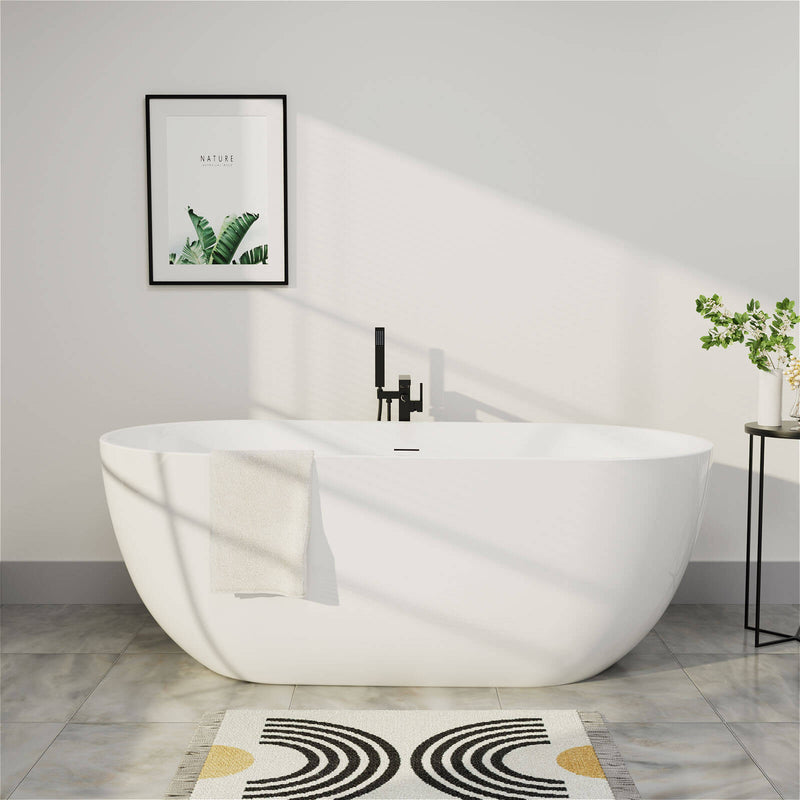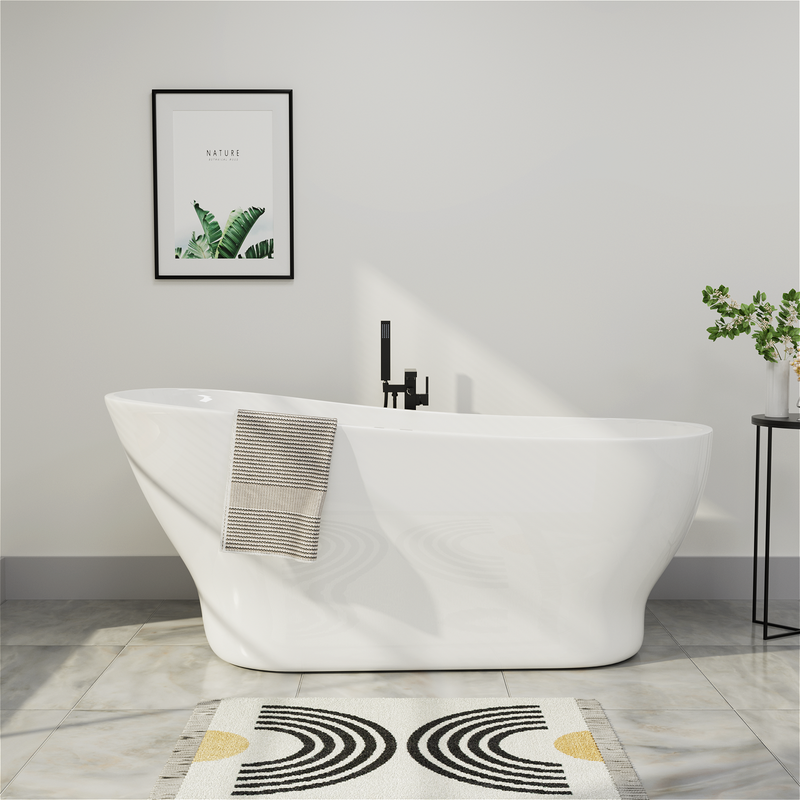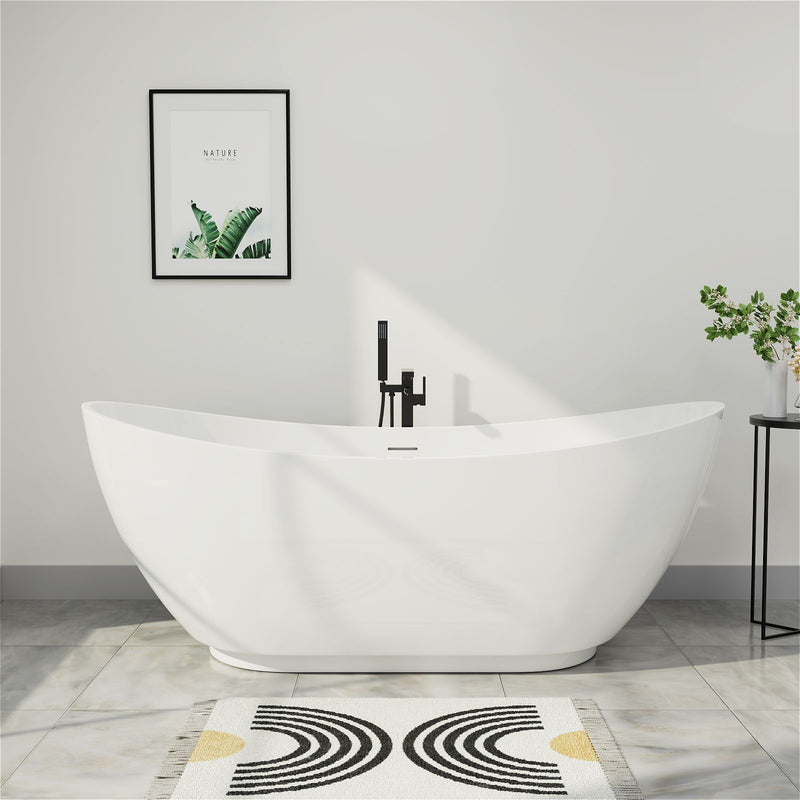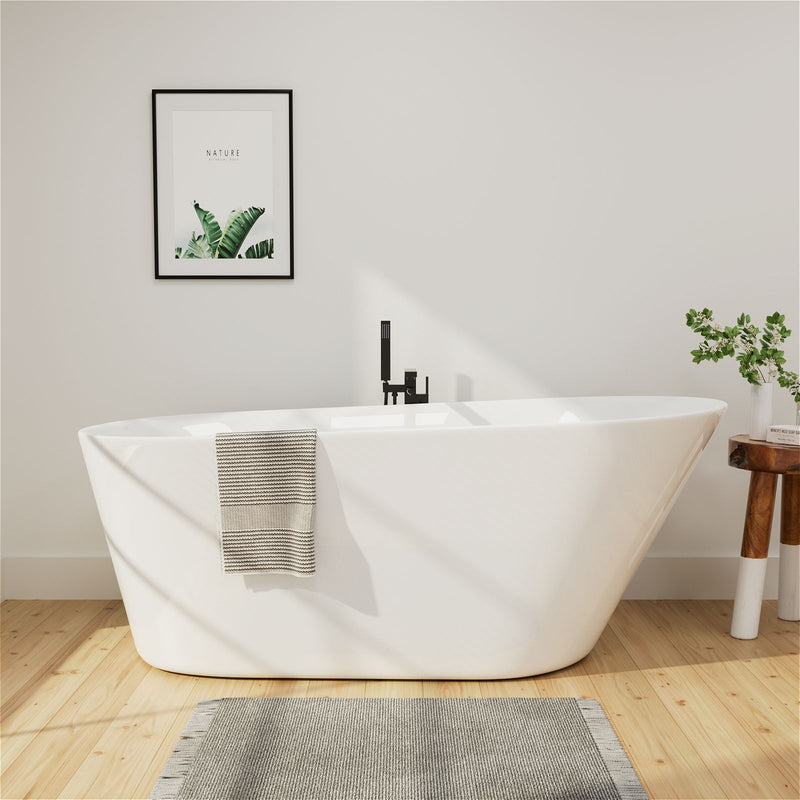
When you bring a slipper tub into your bathroom, you're adding more than just a place to bathe. You're adding a piece of furniture that's all about comfort and style. But its unique shape—with that iconic raised end—can make arranging your bathroom feel like a tricky puzzle. The good news is, whether your bathroom is cozy, medium-sized, or generously proportioned, there's a smart, beautiful way to make it work. It all comes down to honest planning, clever use of space, and choosing a layout that fits how you actually live. This guide will walk you through practical and inspiring layout ideas for bathrooms of every size, helping you create a space where your slipper tub isn't just an awkward addition but the welcoming centerpiece it's meant to be.
Foundational Rules for Any Slipper Tub Layout
Before we dive into specific room sizes, let's cover the universal rules that apply to every slipper tub installation. Getting these basics right is 90% of the battle for a functional and safe bathroom.
Measure, Then Measure Again: This is the most critical step. You must know the exact dimensions of your chosen tub model. You need to know not just its length and width but also its height and the location of its drain and faucet holes. Then, meticulously measure your bathroom, marking the exact location of the door swing, windows, and, most importantly, your existing plumbing lines. Moving drains is often the most complex and expensive part of a bathroom remodel.
Plan for Practical Movement: A beautiful tub is useless if you can't move around it comfortably. Building codes and common sense require at least 21 inches of clear space in front of a toilet and 30 inches of clearance in front of vanities and tubs. For freestanding tubs, aim for at least 4 to 6 inches of space between the tub and any wall for easier cleaning, and more if it's a main walkway.
Mind the Plumbing: Slipper tubs can be plumbed in different ways. Will you use deck-mounted faucets on the tub's rim, a wall-mounted filler behind the tub, or a dramatic floor-mounted faucet? Your layout choice must account for getting water supply lines and the drain to the right spot. A floor-mounted faucet, while stunning, requires plumbing to come up through the floor, which may involve significant work.
Layouts for a Small Bathroom (Under 50 Square Feet)
In a small bathroom, every square inch counts. The goal here is maximum efficiency without sacrificing the charm of your slipper tub.
The Cornerstone Strategy
This is the most effective layout for a tight space. Place a single-slipper tub (with one raised end) diagonally in a corner or tucked straight into an alcove with the low end against the wall.
Why It Works: It uses often-wasted corner space efficiently. Positioning the low end against the wall creates a built-in look and saves precious floor area.
How to Execute: A tub around 60 inches long is ideal. Pair it with a wall-hung (floating) vanity and a compact toilet. The wall-hung vanity creates visible floor space underneath, making the room feel instantly larger. Use a large, frameless mirror above the vanity to reflect light and deepen the room visually. For the shower, the most space-efficient solution is often a showerhead mounted directly over the tub.
The "All-in-One" Wet Room Approach
For the ultimate in small-space efficiency, consider a wet room design. Here, the entire bathroom floor is gently sloped toward a central drain, and the whole space is waterproof.
Why It Works: It completely eliminates the visual barrier of a shower curtain or glass panel, making the room feel open and seamless. Your slipper tub sits proudly in the space, and the shower area flows right into it.
How to Execute: This requires expert waterproofing and proper sloping. It allows you to have a dedicated shower area and a separate tub without the confines of an enclosure. Use consistent flooring throughout, like large-format tiles, to enhance the sense of spaciousness.
Layouts for a Medium Bathroom (50 to 100 Square Feet)
This is the most common bathroom size, offering the flexibility to create defined zones while still making the slipper tub a focal point.
The Balanced Zone Layout
Divide the room into two clear zones: a "dry zone" for the vanity and toilet and a "wet zone" for the tub and shower.
Why It Works: It creates a logical, organized flow. You can place the slipper tub on the wall opposite the vanity, creating a lovely view from the doorway. This layout works beautifully with both single- and double-slipper tubs.
How to Execute: Ensure a clear walkway of at least 36 inches between the zones. Use the tub as a visual anchor. You can install a tub-shower combo or separate them with a glass partition. A simple way to define the zones is by using two complementary tile designs—perhaps one for the floor and another for the tub/shower wall.
The Strategic "L-Shape" Layout
Perfect for a bathroom that is more square than rectangular, this layout places fixtures along two perpendicular walls, freeing up the rest of the floor.
Why It Works: It creates an open, uncluttered central area, making the room feel larger than it is. It naturally guides traffic flow.
How to Execute: Run the vanity and toilet along the longer wall. On the adjacent wall, place your slipper tub. You can frame the tub with a window or create a feature wall behind it with tile or paint. This open floor plan is excellent for a freestanding tub, as it can be appreciated from all angles.
Layouts for a Large Bathroom (Over 100 Square Feet)
In a spacious master bath, you have the freedom to think of your slipper tub as a true centerpiece and create an experience around it.
The Dramatic Island Layout
Here, the tub is placed freestanding in the center of the room or on a raised platform, becoming an undeniable sculptural focal point.
Why It Works: It creates a grand, luxurious statement and turns bathing into a 360-degree experience. It's ideal for a symmetrical double-slipper tub.
How to Execute: This requires significant space—plan for at least 42-48 inches of clearance on all sides. Plumbing will run through the floor. A floor-mounted tub filler is a must. Frame the scene with a statement light fixture above, like a small chandelier or a cluster of pendants. Ensure there is a dedicated spot for towels, a bath caddy, or a small stool within easy reach.
The Dedicated "Bathing Sanctuary" Layout
Partition the large space into separate, room-like areas. One area is a dressing/vanity area, and another is a closed-off bathing chamber housing the tub and a large walk-in shower.
Why It Works: It provides ultimate privacy and a sense of retreat. The bathing area becomes its own environment, which you can heat differently or design with a distinct mood.
How to Execute: Use architectural elements to define the space: a half-wall, a row of columns, a glass block partition, or even a change in ceiling height or flooring material. In the bathing chamber, you can add luxury features like a linear drain in the shower, heated floors, or built-in niches for candles and bath essentials.
Universal Design & Finishing Touches
Regardless of your bathroom's size, these final considerations will elevate your layout from good to great.
Think about lighting in layers. Combine overhead ambient light (like recessed cans), task lighting at the vanity (sconces at head-height, not just above the mirror), and accent lighting. Consider waterproof LED strip lights under the tub's toe-kick or a dimmable light in a shower niche. Always include smart, accessible storage. Recessed niches in shower and tub walls are invaluable. A vanity with deep drawers is more useful than one with doors and a single shelf. For large bathrooms, a freestanding linen cabinet or open shelving can be both practical and decorative. Finally, future-proof your design. Even if you don't need it now, adding blocking in the walls around the tub and toilet for potential future grab bars is a wise and simple step. Choosing lever-handle faucets and a barrier-free shower entry can make the space comfortable for everyone, at any age.
FAQs
What is the minimum bathroom size for a slipper tub?
You can fit a compact (around 55-inch) single-slipper tub in a bathroom as small as 5 feet by 7 feet (35 sq ft), but it will be very tight. A more comfortable minimum is about 6 feet by 8 feet (48 sq ft), using a strategic corner placement.
Can you put a shower over any slipper tub?
Technically, yes, but practically, only if the tub is specifically designed as a "tub-shower." Check the manufacturer's specifications. The tub needs to have a flat rim to handle a shower curtain or door, and the slipper back should not be so high that it interferes with water flow. A handheld shower wand is often the most flexible solution.
Is a single or double slipper tub better for resale value?
This depends heavily on the bathroom's size. In a standard master bath, a well-placed single-slipper tub is a desirable upgrade. In a very large, luxury master bathroom, a double-slipper tub can be a standout feature that appeals to buyers looking for a high-end "spa-like" experience. The key is proportion—an oversized tub in a small room can be seen as a drawback.
How do I clean behind and around a freestanding slipper tub?
This is a crucial practical point. Always ensure there is at least a 4-inch gap between the tub and the wall. Use a soft mop or a specialized "tub gap" cleaning brush. Choosing a tub with a smooth, rolled rim (like many Mokleba models) instead of a sharp square edge also makes wiping down the exterior much easier.
What flooring is best under a heavy, freestanding slipper tub?
The tub must sit on a completely level and structurally sound subfloor. For cast iron or stone composite tubs, which are extremely heavy, this is non-negotiable. Consult a contractor. The finished flooring (tile, vinyl, etc.) should ideally be installed first, and the tub set on top, sealed at the base with a flexible, waterproof caulk. This allows for future flooring changes without moving the tub.