If you are planning a bathroom remodel, you have probably seen photos of freestanding tubs and wondered what they actually cost. The prices online can be all over the place. Some tubs are listed for a few hundred dollars, while others cost several thousand. It is hard to tell what a reasonable budget looks like.
The truth is that the cost of an acrylic freestanding bathtub depends on several factors. The size of the tub, the features you want, and where you live all play a role. This guide breaks down everything you need to know about pricing in 2026. You will learn what different tubs cost, what drives those prices up or down, and how to budget for installation.
Acrylic Freestanding Bathtub Price Ranges in 2026
The first question most homeowners ask is straightforward. How much does an acrylic freestanding bathtub actually cost? The answer depends heavily on what you are looking for, but there are clear price tiers that cover most options on the market.
Budget-Friendly Options
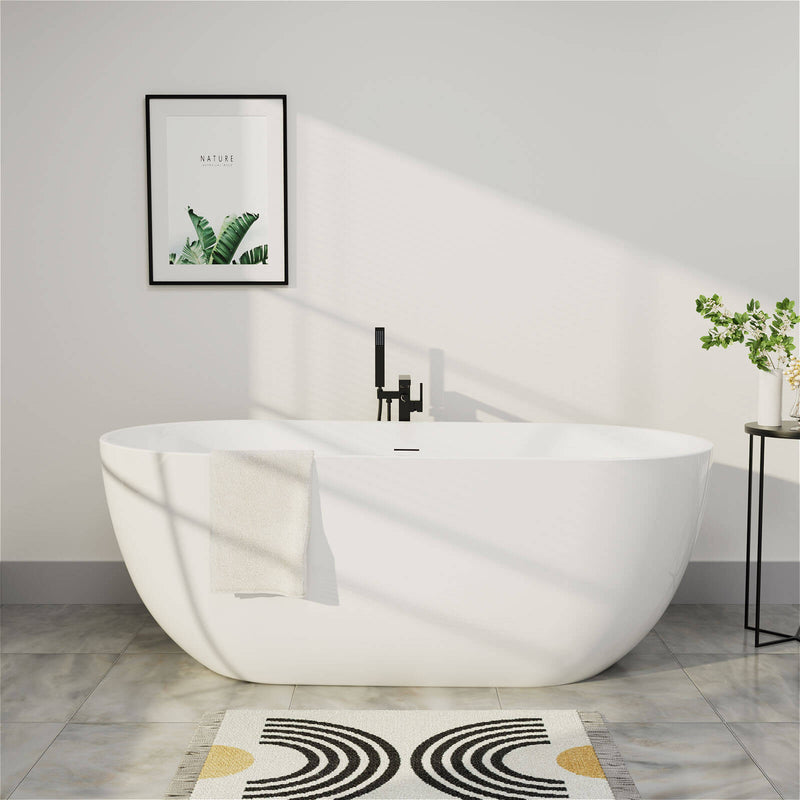
If you are working with a tight budget, you can find basic acrylic freestanding bathtubs for $600 to $900. These tubs are usually smaller in size, often around 55 to 60 inches long. They have simple shapes without many extra features. The acrylic used in budget models is still durable, but the tub may have less reinforcement on the back side.

A good example in this range is a 62-inch insulated oval tub priced around $675. These budget-friendly options work well for guest bathrooms or for homeowners who want the look of a freestanding tub without spending a lot of money. The trade-off is that you get fewer design choices and sometimes thinner acrylic that does not hold heat as well.
Mid-Range Acrylic Freestanding Tubs
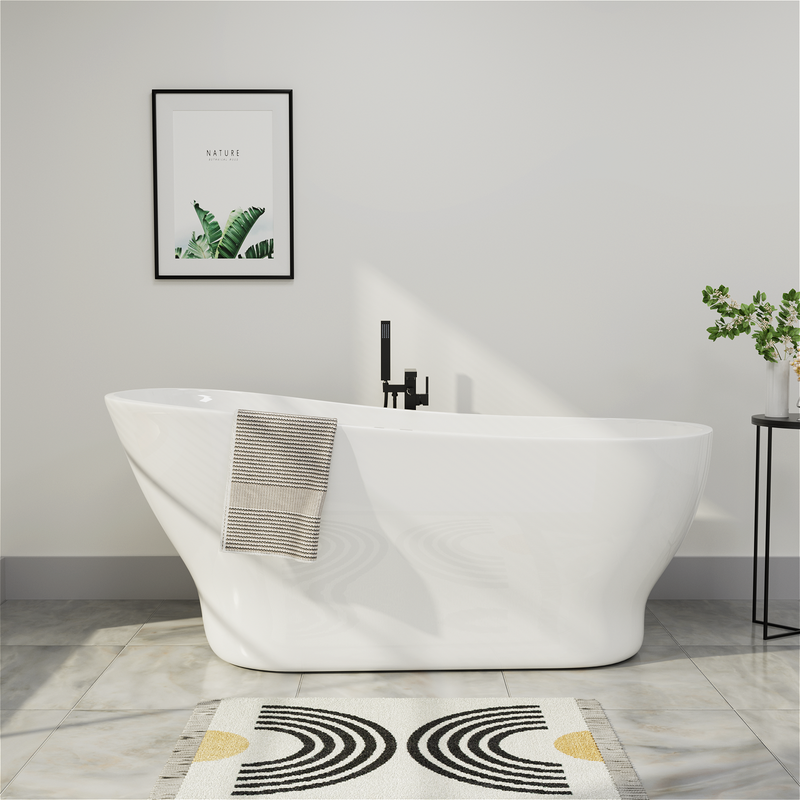
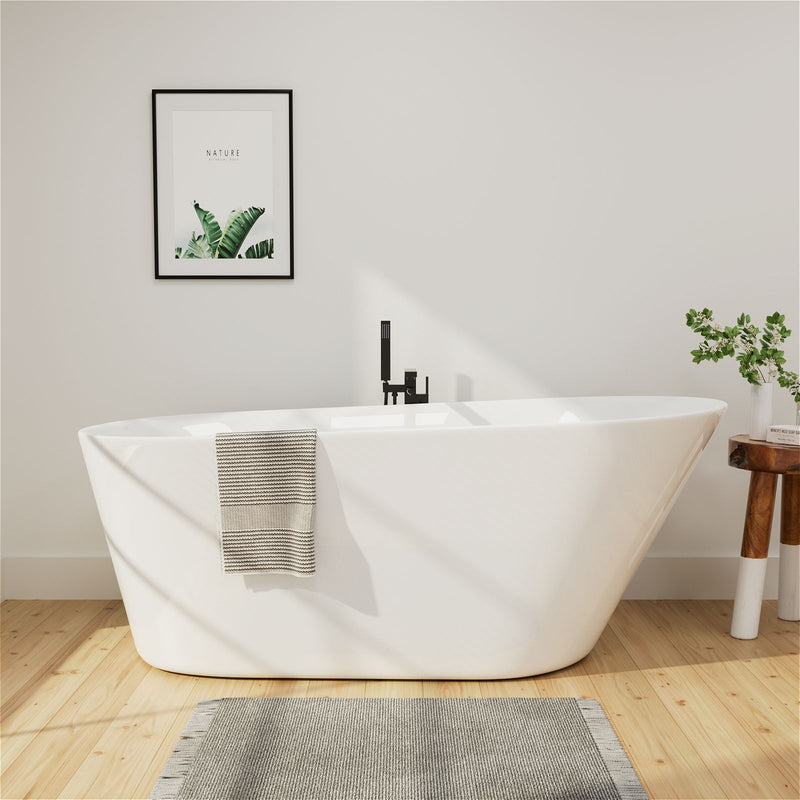
Most homeowners end up spending between $900 and $1,800 on an acrylic freestanding bathtub. This is the sweet spot for value. In this price range, you get better construction with reinforced fiberglass backing that adds stiffness and improves heat retention. The tubs are often larger, typically 60 to 67 inches long, and they come in more stylish shapes like oval or asymmetrical designs.
Mid-range tubs usually have a deeper soaking depth, often around 15 to 18 inches. Many include features like a sloped backrest for comfort or a built-in overflow system. For most families, this is the price range that makes the most sense. You get a tub that looks great and performs well without paying for luxury extras you may not need.
Premium Acrylic Freestanding Tubs
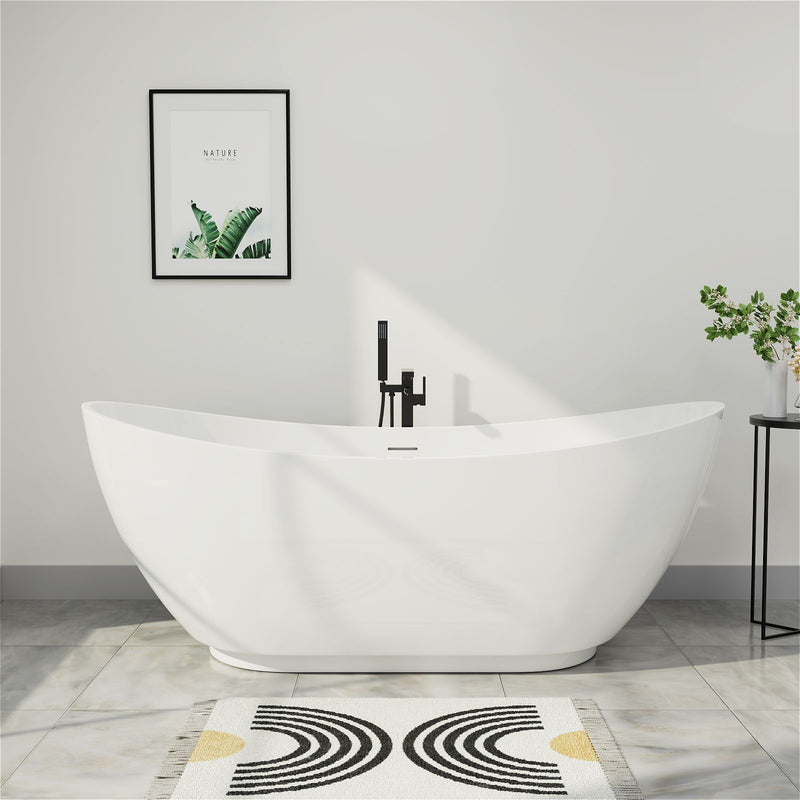
At the high end, acrylic freestanding bathtubs can cost $1,800 to $3,500 or more. These tubs come from premium manufacturers and often feature unique shapes, thicker acrylic, and better finish quality. Some include built-in armrests, heated surfaces, or even LED lighting.
What you are really paying for at this level is design and craftsmanship. The tub becomes a true centerpiece of the bathroom. Premium tubs also tend to have better warranties and customer support. If you are doing a high-end master bathroom renovation and plan to stay in the house for many years, spending more on a premium tub can be worth it.
What Drives the Cost of an Acrylic Bathtub
The price of an acrylic bathtub is not random. Several specific factors determine whether you pay $600 or $2,500. Understanding these factors helps you decide where to spend more and where you can save.
Size Matters
Size is one of the biggest factors affecting price. A standard 60-inch acrylic freestanding tub costs less than an oversized 72-inch model because it uses less material. A small alcove acrylic bathtub around 5 feet long might cost $300 to $800, while a large freestanding soaking tub over 7 feet long can cost upwards of $2,000.

Before you shop, measure your bathroom carefully. A tub that is too large for the space will look awkward and make the room feel cramped. It will also cost more than you need to spend. Stick with a size that fits your space comfortably, and you will save money without sacrificing function.
Design and Shape
Simple rectangular tubs are the most affordable. Oval, round, or asymmetrical shapes cost more because they require more complex molds and manufacturing processes. Freestanding tubs themselves are generally more expensive than alcove or drop-in models because they are designed to be visible from all sides. Every surface needs a high-quality finish.
If you are on a budget, choosing a simpler shape is an easy way to save money. A classic oval tub looks elegant in almost any bathroom and costs significantly less than a sculptural or geometric design.
Features and Accessories
Adding features increases the price quickly. Hydrotherapy jets can add 15 to 40 percent to the base price of a tub. Heated surfaces, LED lighting, and built-in sound systems add even more. For most homeowners, these extras are not necessary. A standard acrylic freestanding tub without jets provides a perfectly good soaking experience.
The quality of the hardware also matters. Faucets and drains range from $100 for basic models to $1,500 for high-end designer fixtures. You can save money by choosing simple, reliable fixtures rather than premium brands.
Brand and Quality
Well-known brands with strong reputations charge more for their tubs. They use higher-quality acrylic, better reinforcement, and more rigorous manufacturing processes. That does not mean cheaper tubs are bad. Many lesser-known brands offer good quality at lower prices. The key is to read reviews and look for information about construction quality, particularly the thickness of the acrylic and the type of reinforcement used.
Installation Costs for a Freestanding Tub
The price of the tub itself is only half the story. Installation can add a significant amount to your total project cost. In many cases, the labor and plumbing work cost more than the tub.
Average Installation Cost Range
On average, installing a bathtub costs homeowners around $3,000. However, the range is wide. A straightforward replacement of an existing tub might cost $1,400 to $2,500, while a complex installation involving plumbing relocation can reach $10,500 or more. For a freestanding tub specifically, most homeowners spend between $800 and $4,500 on the tub itself, not including installation.

Labor Costs
Labor typically makes up 40 to 60 percent of the total project budget. For a simple replacement where the new tub fits in the same spot as the old one, labor might run $400 to $2,000. But freestanding tubs often require more work. Because they sit away from the wall and have floor-mounted drains, the plumbing often needs to be relocated. For these more intricate installations, labor costs can easily exceed $3,000.
Plumbing Modifications
Moving pipes or drains adds $200 to $1,500 to your project, depending on how much work is needed. If you are converting from an alcove tub to a freestanding tub, the drain location will almost certainly need to move. The plumber has to cut into the subfloor, reroute pipes, and then repair the floor before the new tub can be installed. This is standard work, but it adds time and money.
Removal of the Old Tub
Getting rid of your existing tub costs $100 to $500. The contractor has to disconnect the plumbing, break the old tub into manageable pieces if it is heavy, and haul everything away. Some contractors include this in their labor estimate, but others charge it separately. Ask before you sign a contract.
Permits and Inspections
Depending on where you live, you may need a permit for a bathtub installation. Permit costs range from $50 to $400. In some areas, permits are required only when plumbing is being moved. In other areas, any bathroom alteration requires approval. Check with your local building department before starting the project.
Additional Costs to Consider
Tile work around the tub can add $800 to $3,000. New faucets and fixtures range from $100 to $1,500. If your contractor discovers water damage or subfloor issues during demolition, expect to pay $300 to $2,000 for repairs. These surprises are common in older homes, so it is wise to budget an extra 10 to 15 percent for unexpected issues.
Total Project Cost Breakdown
Putting all the pieces together gives you a realistic picture of what a freestanding tub project actually costs.
For a budget project, you might spend $600 to $900 on an acrylic freestanding tub, $600 to $1,400 on installation and plumbing, and $100 to $300 on delivery and removal. The total comes to roughly $1,500 to $3,000.
For a mid-range project, expect to pay $900 to $1,800 for the tub, $1,200 to $2,000 for installation, and $200 to $500 for permits and extras. The total lands between $3,000 and $5,500.
For a premium project with a high-end tub, custom finishes, and complex installation, costs can reach $5,500 to $9,000 or more.
How Acrylic Compares to Other Materials
Acrylic is not the only material available for freestanding tubs. Comparing it to other options helps you understand whether acrylic is the right choice for your budget.
Acrylic tubs typically cost $600 to $1,800. They are lightweight, which keeps installation costs lower. Fiberglass tubs are even cheaper at $200 to $800, but they are less durable and more prone to cracking. Cast iron tubs cost $800 to $3,000 and last a long time, but they are extremely heavy and require floor reinforcement in many homes. Solid surface tubs range from $1,600 to $3,500 and offer a matte finish that some homeowners prefer, but they scratch more easily than acrylic. At the very top end, marble tubs cost $3,500 to $12,000 or more.

For most homeowners, acrylic offers the best balance of cost, durability, and ease of installation. You get a good-looking tub that performs well without the high price tag or installation challenges of heavier materials.
Saving Money on Your Freestanding Tub Project
You do not need to sacrifice quality to stay on budget. Several strategies can help you save money without ending up with a tub you regret.
Shop during contractor off-seasons. Many contractors offer lower rates during winter months when demand is slower. You might save 10 to 20 percent just by timing your project right.
Get multiple quotes. Compare at least three detailed proposals from licensed contractors. Make sure each quote includes the same scope of work so you can compare apples to apples.
Choose acrylic over premium materials. Acrylic delivers excellent performance without the premium price tag of cast iron or stone. You will still enjoy years of reliable service while keeping thousands of dollars in your pocket.
Bundle your project. If you are also planning to replace the vanity, flooring, or lighting, do it all at once with the same contractor. Bundling multiple upgrades saves on repeated labor charges.
Skip unnecessary features. Do you really need a heated surface or LED lights? For most people, the answer is no. A basic acrylic freestanding tub provides a perfectly comfortable soaking experience.
FAQs
How much does a typical acrylic freestanding bathtub cost in 2026?
A typical acrylic freestanding bathtub costs between $900 and $1,800 for the tub itself. Budget models start around $600, while premium options can exceed $2,500. The total project cost including installation usually ranges from $3,000 to $5,500 for a mid-range setup.
Is an acrylic freestanding bathtub worth the money compared to other materials?
Yes, for most homeowners acrylic offers the best value. It costs significantly less than cast iron or solid surface tubs, but it still provides good durability, decent heat retention, and easy maintenance. Acrylic is also much lighter than other materials, which keeps installation costs lower.
What affects the price of an acrylic freestanding bathtub the most?
Size is the biggest factor. Larger tubs require more material and cost more. Design complexity also matters. Simple oval or rectangular shapes cost less than sculptural or asymmetrical designs. Features like jets, heated surfaces, or LED lighting add significant cost. The brand and build quality also play a role.
How much does labor cost to install a freestanding bathtub?
Labor typically costs $400 to $2,000 for a straightforward installation where plumbing does not need to be moved. For freestanding tubs that require drain relocation or other plumbing modifications, labor costs can exceed $3,000.
Do I need to reinforce my floor for an acrylic freestanding bathtub?
Usually not. Acrylic tubs weigh only 70 to 100 pounds, which is much lighter than cast iron or stone tubs. A full tub with water adds another 300 to 400 pounds, but most standard wood-frame floors can handle this without reinforcement. If you have an older home with undersized joists, it is worth having a contractor check before you buy.
What is the total cost to install a freestanding bathtub including the tub and labor?
For a budget project using an acrylic tub, expect to spend $1,500 to $3,000 total. For a mid-range project, the total is $3,000 to $5,500. For a premium project with a high-end tub and complex installation, costs can reach $5,500 to $9,000 or more.
Can I install a freestanding bathtub myself to save money?
This is not recommended for most homeowners. Freestanding tubs require precise drain placement, proper leveling, and often involve moving plumbing lines. Mistakes can lead to leaks, water damage, and expensive repairs. Hiring a licensed plumber ensures the job is done right and protects your home.
How long does an acrylic freestanding bathtub last?
With proper care, a quality acrylic tub lasts 20 years or more. The non-porous surface resists staining and does not absorb water. If the tub gets scratched, you can buff it out with fine-grit sandpaper. For deeper damage, repair kits are available. Acrylic is one of the most repairable tub materials on the market.
Do acrylic freestanding tubs hold heat well?
Acrylic retains heat better than metal tubs but not as well as cast iron or stone. The material warms up to body temperature within a few minutes of filling. Many acrylic tubs come with foam insulation on the back side, which significantly improves heat retention. For a 30-minute soak, an acrylic tub works perfectly well.
Is there a big price difference between alcove tubs and freestanding tubs?
Yes. Alcove tubs, which fit against three walls, cost $250 to $1,000 for the unit. Freestanding tubs start around $600 and go up from there. The difference comes down to design and visibility. A freestanding tub is meant to be seen from all sides, so every surface requires a high-quality finish. Alcove tubs only need a good finish on the inside and the front apron.