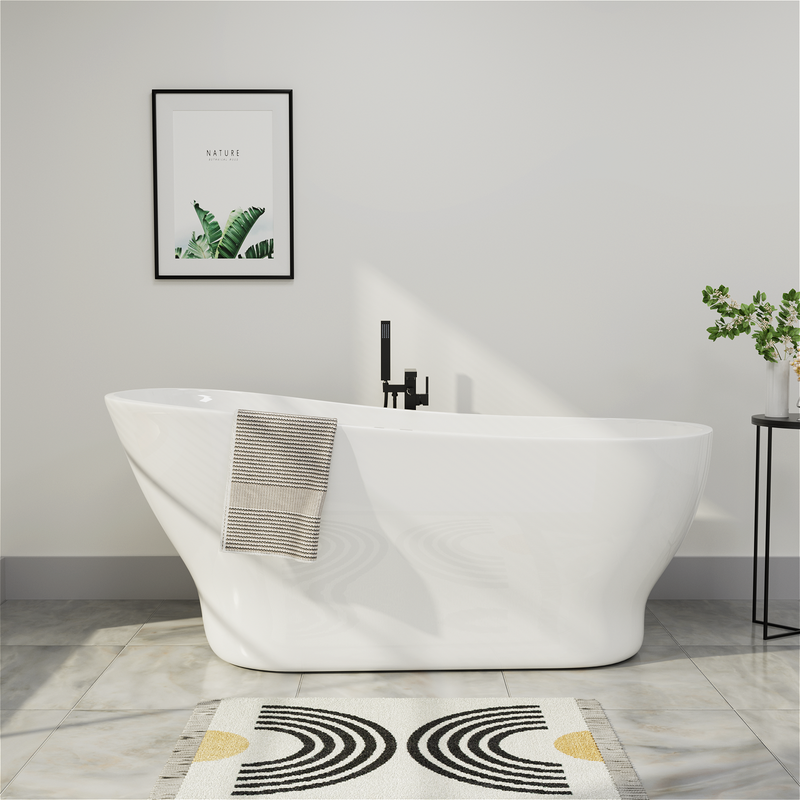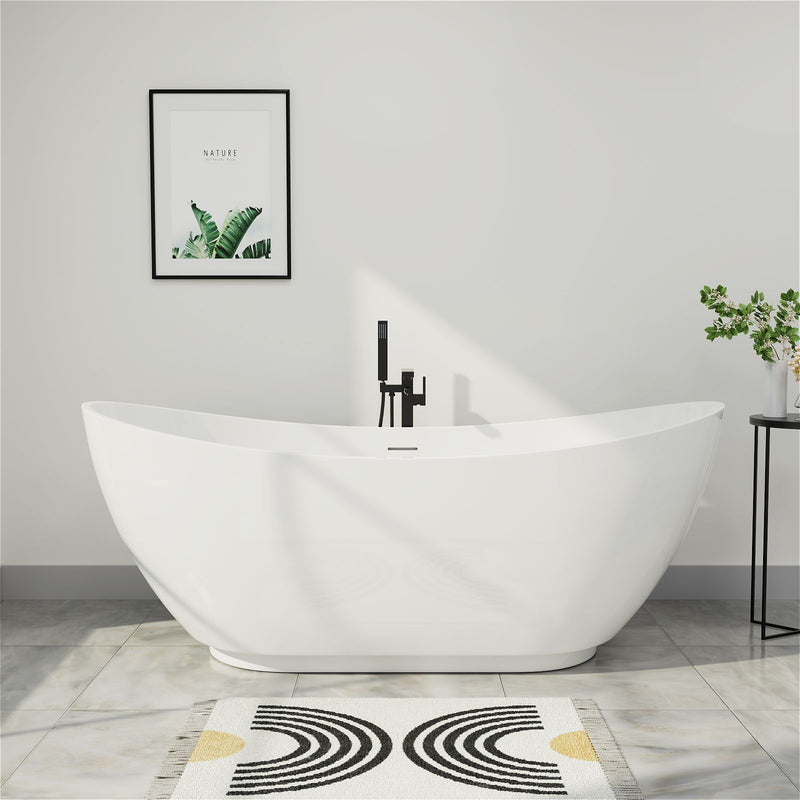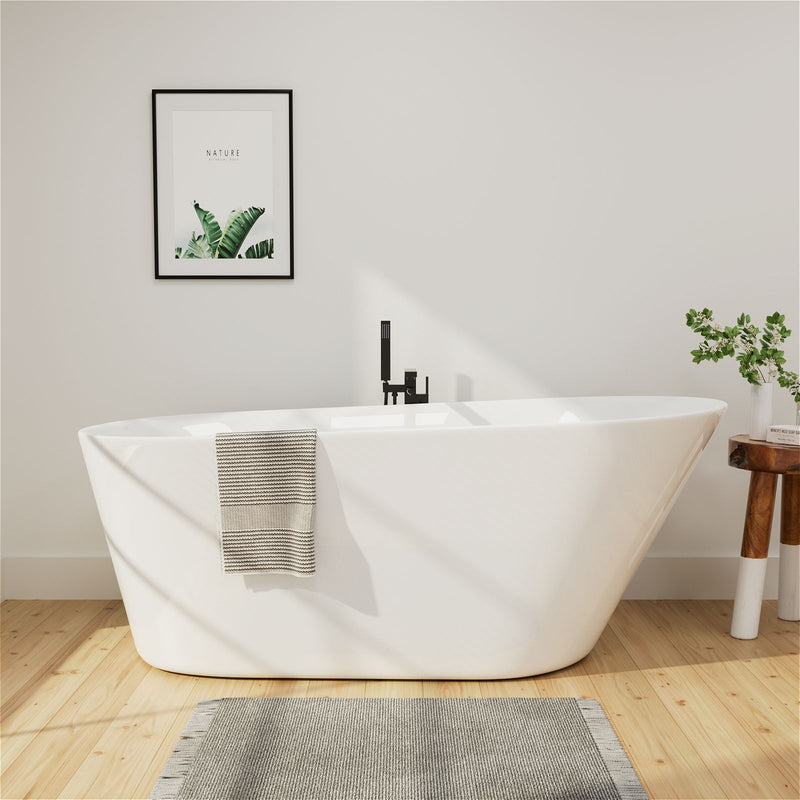
A freestanding bathtub can be the heaviest fixture you ever install in your home. Unlike a toilet or a vanity, a tub gets filled with hundreds of pounds of water, then you add a person on top of that. And here is the catch: many freestanding tubs rest on just four small feet, concentrating all that weight into tiny contact points on your floor.
So before you fall in love with that beautiful tub, you need to answer one question. Can your floor handle it?
This guide walks you through everything you need to know about floor support for freestanding bathtubs. We will cover how to calculate the real weight of a filled tub, how to inspect your floor structure, when you need reinforcement, and how to make your floor strong enough for the tub you want.
Understanding the Weight Challenge
Why Freestanding Tubs Are Different
A standard alcove tub sits against the wall and often has its weight distributed along a longer base or apron. But a freestanding tub stands alone, typically on four small feet or a narrow base. This means the weight is concentrated rather than spread out.
When your floor feels a heavy point load, it reacts differently than when weight is spread evenly. A 1,000-pound total load spread over 12 square feet puts about 83 pounds per square foot on the floor. That same 1,000 pounds concentrated on four 2-inch by 2-inch feet puts over 1,500 pounds per square foot at each contact point. The floor structure cares about both the total weight and how that weight is delivered.
What Happens When a Floor Is Overloaded
You might expect a floor to collapse immediately if it cannot support a tub. That rarely happens. Instead, you will see warning signs over time.
The floor may develop a bounce when you walk near the tub. Grout lines in tile floors may crack. The ceiling below may show cracks or begin to sag. The tub itself may slowly shift out of level, putting stress on the drain connection and causing leaks. These problems often appear months after installation, long after the contractor has gone.
That is why checking your floor before you buy the tub is so important. Prevention is much cheaper than repair.
How Much Does a Filled Bathtub Really Weigh?
The Simple Formula
The total weight your floor must support has three parts.
First is the empty tub itself. Second is the water. Third is the person or people using the tub.
Here is the formula every homeowner needs to know.
One gallon of water weighs 8.34 pounds.
That is the key number. Multiply your tub's water capacity by 8.34 to get the water weight. Then add the tub's empty weight and the weight of the bathers.
Weight by Tub Material
Different tub materials have very different empty weights. Here is what you can expect.
Acrylic tubs are the lightest option. A standard acrylic freestanding tub weighs 50 to 100 pounds empty. Some larger models go up to 120 pounds. This makes acrylic popular for second-floor installations.
Steel tubs weigh more, typically 75 to 150 pounds empty. They are lighter than cast iron but heavier than acrylic. Steel conducts heat away from the water faster, so your bath cools more quickly.
Cast iron tubs are heavy. A standard 60-inch alcove cast iron tub weighs 320 to 350 pounds. Freestanding cast iron models run 350 to 450 pounds. Vintage clawfoot tubs can weigh 400 to 500 pounds or more.
Stone resin and solid surface tubs fall in the middle. They typically weigh 120 to 180 kilograms, which is about 265 to 400 pounds. These materials offer a premium feel without the extreme weight of cast iron.
Real-World Weight Examples
Let us calculate some realistic total loads.
A standard acrylic tub weighs 80 pounds empty. It holds 50 gallons of water, which weighs about 417 pounds. One adult bather adds 180 pounds. The total is 677 pounds. Well within most floor limits.
Now consider a cast iron freestanding tub. The empty tub weighs 380 pounds. It holds 60 gallons of water, about 500 pounds. Two adults at 350 pounds total brings the load to 1,230 pounds.
For a large soaking tub holding 80 gallons of water, the water alone weighs 667 pounds. Add a 400-pound cast iron tub and two adults, and you are looking at over 1,400 pounds.
The Water Capacity Trap
Do not assume a 60-inch tub holds 60 gallons. That is not how it works.
Water capacity depends on interior depth, shape, and overflow height. A 60-inch tub might hold only 40 gallons. Another 60-inch tub designed for deep soaking might hold 75 gallons. That difference is about 290 pounds of water weight. Always check the manufacturer's spec sheet for capacity to overflow before you buy.
Inspecting Your Floor Structure
Access Matters
The first question is whether you can see your floor structure. If you have an unfinished basement, crawl space, or open ceiling below the bathroom, you can inspect the joists directly. If the ceiling below is finished, you have more uncertainty. That does not mean you cannot install a tub. It means you should treat it with extra caution and possibly open an inspection hole.
What to Measure
If you can access the joists, measure four things.
Joist size. Common sizes are 2x8, 2x10, and 2x12. Deeper joists are stiffer and can span longer distances. A 2x12 is much stronger than a 2x8.
Joist spacing. Measure from the center of one joist to the center of the next. Sixteen inches on center is standard in modern homes. Older homes may have 12-inch, 19.2-inch, or 24-inch spacing. Wider spacing means each joist carries more weight.
Joist span. This is the unsupported distance between bearing points, such as from one foundation wall to a beam, or from a beam to another beam. Longer spans mean more bounce and less weight capacity.
Joist condition. Look for notches, holes, splits, water damage, or signs of rot. Plumbing and electrical work sometimes leave joists weakened. If you see problems, you need reinforcement.
The Bounce Test
Even without measuring, you can get a sense of your floor. Walk around the bathroom. Does the floor feel solid, or does it bounce when you walk? Does it squeak or feel soft in spots? A floor that already feels springy will not handle a heavy tub well.
When to Call a Professional
If you have any of these conditions, get a structural review before buying a tub.
- Joist spacing wider than 16 inches on center
- Span longer than about 11 feet
- Second-floor installation in an older home
- Visible notches, holes, or water damage
- Total tub, water, and bather load over 800 pounds
- Any uncertainty about floor condition
A structural engineer costs a few hundred dollars. That is cheap compared to fixing a sagging floor or damaged ceiling.
Building Code Requirements
The 40 PSF Standard
Residential building codes typically require floors to support a live load of 40 pounds per square foot. For a 5-foot by 3-foot tub footprint, that allows about 600 pounds by simple calculation. But that calculation assumes the weight is evenly spread. Your tub's feet concentrate the load.
For total loads over 800 pounds, you should assume you need reinforcement unless you have confirmed your floor meets higher standards.
Upstairs Installations
Second-floor bathrooms are where weight problems show up first. Even a lightweight acrylic tub filled with water can exceed 600 pounds. And water weight dominates the calculation. Switching from cast iron to acrylic saves maybe 300 pounds. But the water still weighs 500 pounds or more. That is why upstairs tubs always need careful evaluation.
How to Reinforce Your Floor
Sistering Joists
The most common reinforcement method is sistering. You attach a new joist alongside the existing one, creating a stronger combined member.
To sister a joist, you need a piece of lumber the same size as the existing joist. It should span the full distance between supports, just like the original. You attach it with construction adhesive and structural screws. Some experts recommend screws every foot along the length.
Sistering costs about $100 to $300 per joist in materials and labor. For a typical bathroom, you might need to sister four to six joists.
Adding Blocking
Blocking means installing perpendicular pieces of wood between joists. These stiffen the floor by preventing individual joists from twisting or moving independently. Blocking also helps distribute point loads across multiple joists.
Use lumber that fits snugly between the joists. Cut it a millimeter or two long so it fits tight. Screw it in place through the joists on each side.
Adding a Support Beam
If your joist span is too long, you might need a new beam or wall underneath to shorten the span. This is a bigger project. It costs $1,000 to $3,000 or more, depending on access and materials. But it can transform a bouncy floor into a rock-solid one.
Subfloor Reinforcement
Sometimes the problem is not the joists but the subfloor. If your subfloor is thin or damaged, adding a second layer of plywood can help. Use 3/4-inch exterior-grade plywood screwed to the existing subfloor at 6-inch intervals. This spreads the tub's weight over more joists.
Leveling Your Tub
Why Leveling Matters
A freestanding tub must sit perfectly level. If it does not, the tub will rock, putting uneven stress on the feet and the drain connection. Over time, this can cause leaks.
Before you set the tub, check the floor with a spirit level. Mark any high or low spots. An uneven floor is the most common problem during installation.
How to Level
Many freestanding tubs come with adjustable feet. You can turn them to raise or lower each corner. If your tub does not have adjustable feet, you can use non-compressible shims under the feet. Do not use rubber or foam shims. They will compress over time.
After leveling, apply a bead of 100 percent silicone sealant around the tub base where it meets the floor. This prevents water from getting underneath and hides small gaps. Leave a small opening at the back so any trapped moisture can escape.
Weight Limits by Tub Material
Acrylic Tubs
Standard acrylic tubs support 300 to 400 pounds. Reinforced acrylic tubs support 400 to 600 pounds. Freestanding acrylic tubs can support 550 to 1,000 pounds when properly installed.
Acrylic is the best choice for second-floor bathrooms or any situation where floor reinforcement is not practical. The material is warm to the touch, retains heat well, and resists stains. Quality acrylic tubs last 15 to 20 years.
Steel Tubs
Steel tubs are lighter than cast iron but heavier than acrylic. They typically weigh 75 to 150 pounds empty. The enamel coating resists scratches and stains, but steel conducts heat away from the water quickly. Your bath will cool faster than in acrylic or cast iron.
Cast Iron Tubs
Cast iron tubs weigh 240 to 500 pounds empty. They are the most durable option, often lasting 50 years or more. Cast iron holds heat exceptionally well, keeping your bath warm longer than any other material.
The weight is the main drawback. A filled cast iron tub with two people can exceed 1,200 pounds. You almost certainly need floor reinforcement for second-floor installations. On a ground floor slab, cast iron is usually fine, but check your local building codes.
Stone Resin and Solid Surface Tubs
These modern materials offer a good balance. They weigh 265 to 400 pounds empty, heavier than acrylic but lighter than cast iron. They feel substantial, retain heat well, and resist scratches. Solid surface tubs often have full-contact bases rather than small feet, which helps distribute weight more evenly.
When to Walk Away
Sometimes the honest answer is that your floor cannot safely support the tub you want without major work.
If your home has 2x6 joists on 24-inch centers spanning 12 feet, that floor is not meant for a cast iron tub. If the bathroom is on the second floor and you cannot access the joists from below, adding reinforcement becomes a major demolition project. If the subfloor is already damaged or the floor bounces noticeably, a heavy tub will make problems worse.
In these cases, consider a lighter tub. An acrylic tub can give you the freestanding look you want without the structural headaches. Or consider changing the tub location to an area with better framing.
FAQs
How much weight can a typical bathroom floor hold?
Most residential floors are designed for 40 pounds per square foot live load. For a tub footprint of about 12 square feet, that suggests 480 pounds. But tubs concentrate weight on small feet, so you need to evaluate the actual total load and point load distribution. Many floors safely support tubs weighing over 1,000 pounds when properly evaluated.
Do I need to reinforce my floor for an acrylic freestanding tub?
Not necessarily. Acrylic tubs are lightweight, typically 50 to 100 pounds empty. With water and a bather, the total load is often 600 to 700 pounds. Many floors can handle this without reinforcement. But you should still inspect your joists and check for bounce.
How can I tell if my floor is strong enough?
Start with the bounce test. Walk around the bathroom. If the floor feels solid, that is a good sign. If possible, inspect the joists from below. Check size, spacing, span, and condition. If you are unsure, hire a structural engineer for a few hundred dollars. That is cheap insurance.
What is the heaviest type of freestanding bathtub?
Cast iron tubs are the heaviest, typically 300 to 500 pounds empty. Vintage clawfoot models can exceed 500 pounds. With water and bathers, total loads can exceed 1,400 pounds.
Can I put a freestanding tub on a second floor?
Yes, but you need to be careful. Evaluate the joists carefully. For heavy tubs, you will likely need reinforcement. Even for acrylic tubs, check the floor structure. Water weight alone can be 500 pounds or more.
How do I calculate the total weight of my tub setup?
Use this formula: empty tub weight + (water capacity in gallons × 8.34) + bather weight. Add a safety margin of 10 to 20 percent for sloshing and movement. Do not guess at water capacity. Check the manufacturer's specification sheet for capacity to overflow.
What does sistering a joist mean?
Sistering means attaching a new joist alongside an existing one. The new joist runs the full span between supports. You attach it with construction adhesive and structural screws. This strengthens the floor and reduces bounce.
Is plumber's putty safe for sealing a freestanding tub?
No. Use 100 percent silicone sealant around the tub base. Plumber's putty contains oils that can stain some materials and may degrade over time. Silicone stays flexible and waterproof for years.
How much does floor reinforcement cost?
Sistering joists costs $100 to $300 per joist. Adding a support beam costs $1,000 to $3,000. A structural engineer assessment costs $300 to $700. Compare that to repairing a sagging floor or water-damaged ceiling, which can cost $5,000 or more.
Can my floor collapse from a heavy bathtub?
Sudden collapse is rare. The more common outcome is gradual sagging, cracked tile, damaged ceilings below, and tubs that go out of level and leak. These problems appear over months or years. That is why checking your floor before installation is so important.
Conclusion
A freestanding bathtub can transform your bathroom, but only if your floor can support it safely. Start by calculating the total weight of the tub, water, and bathers. Remember that water weighs 8.34 pounds per gallon, and that number adds up fast.
Next, inspect your floor structure. If you can access the joists from below, measure their size, spacing, span, and condition. Look for bounce, sag, or any signs of weakness. For heavy tubs over 800 pounds total load, assume you need reinforcement unless you have confirmed otherwise.
For second-floor installations, be extra cautious. Even lightweight tubs carry hundreds of pounds of water. If you are unsure at any point, hire a structural engineer. The cost of an assessment is small compared to the cost of repairing a sagging floor or a leaking tub.
With proper planning and the right floor support, your freestanding bathtub will provide years of reliable service. Rush the structural work, and you risk problems that are expensive and frustrating to fix. Take the time to do it right.