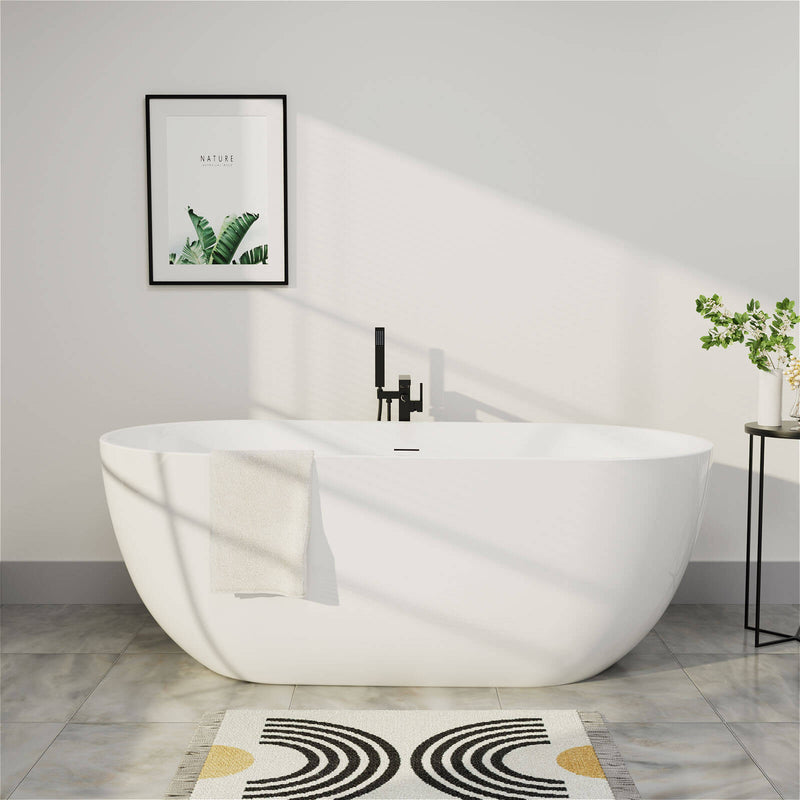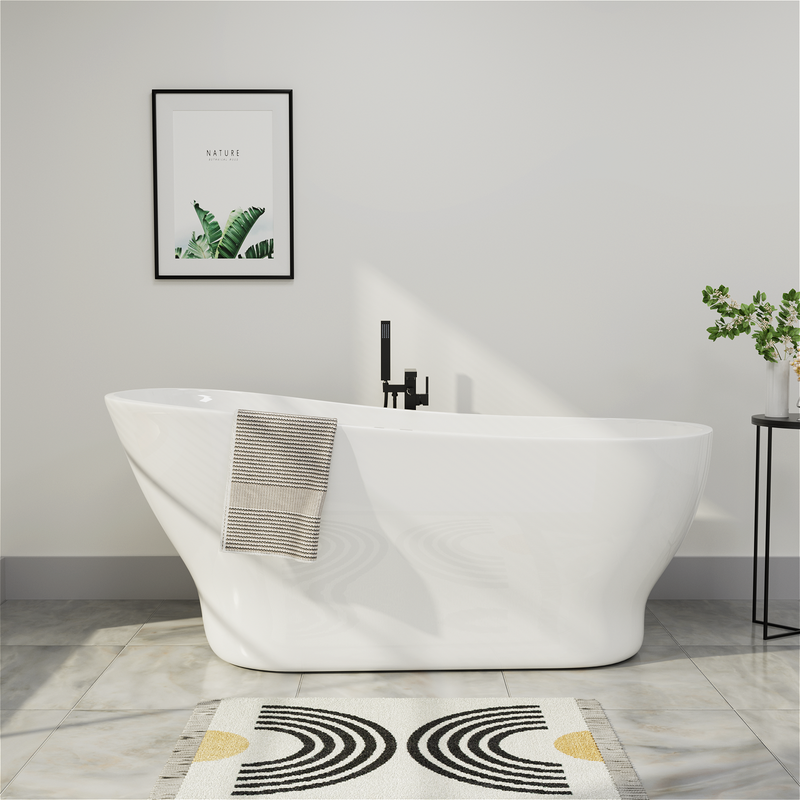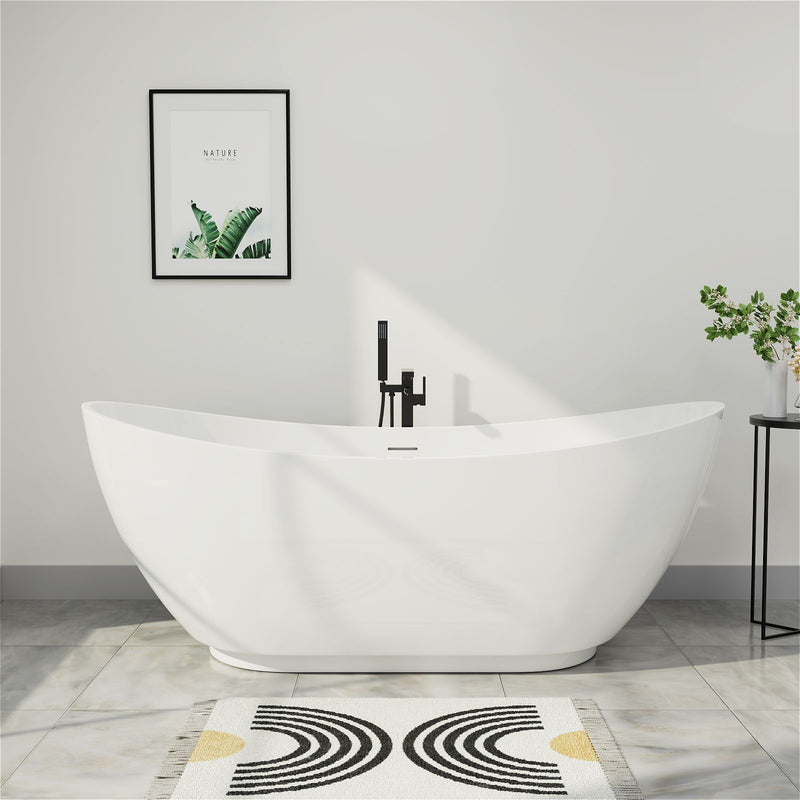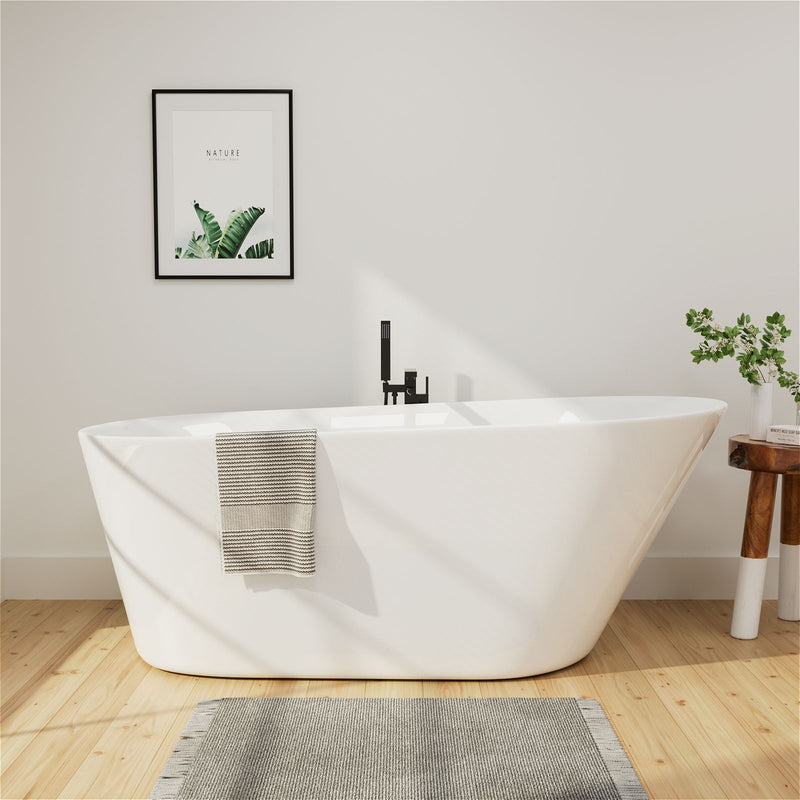
A freestanding tub faucet is more than just a water source—it is a design statement that can transform your bathroom. But before you fall in love with a particular style, you need to answer one critical question: how high should the faucet be? Get it wrong, and you will deal with constant splashing, awkward reach, or a tub that looks visually unbalanced.
The right freestanding tub faucet height is not a one-size-fits-all number. It depends on your tub's dimensions, the faucet's specifications, and who will use it. A faucet that is too low will hit the tub rim or make cleaning underneath impossible. A faucet that is too high will create a waterfall effect that splashes water everywhere and makes annoying noise.
This guide walks you through everything you need to know about freestanding tub faucet height. We will cover standard measurements, how to calculate the right height for your specific setup, installation considerations, and common mistakes to avoid. Whether you are a homeowner planning a renovation or a DIY installer, this information will help you get the height right the first time.
What Does "Faucet Height" Actually Mean?
Before you measure anything, you need to understand what "height" refers to. When professionals talk about faucet height, they usually mean one of several specific measurements.
Overall Faucet Height is the distance from the floor to the highest point of the faucet, usually the top of the spout arch. This measurement matters for visual proportion and clearance with shelves or mirrors.
Spout Height is the distance from the floor to the center of the water outlet. This is the most important measurement for water flow and splashing control.
Spout-to-Rim Clearance is the vertical distance between the spout outlet and the top edge of the bathtub. This gap determines how smoothly water enters the tub.
Handle Height refers to the position of the control levers or knobs. Handles should be easy to reach without bending or stretching.
Handheld Shower Mounting Height applies if your faucet includes a handheld shower. The holder should be positioned so the sprayer is easy to grab and the hose does not drag across the tub edge.
Understanding these terms helps you read product specifications and communicate clearly with your installer.
Standard Height Ranges for Freestanding Tub Faucets
Most freestanding tub faucets have an overall height between 35 and 45 inches from the floor. The spout itself typically sits 30 to 40 inches above the floor. But these numbers mean little without knowing your tub.
Bathtub Rim Height
The starting point for any height calculation is your tub's rim height. Standard freestanding bathtubs have a rim height of approximately 22 to 24 inches from the floor. Deeper soaking tubs may be taller, while some compact models are shorter. Measure your actual tub. Do not rely on averages.
Recommended Spout-to-Rim Clearance
The vertical gap between the spout outlet and the tub rim should generally be 6 to 10 inches. This range balances several factors:
At 6 inches: Water flows with minimal drop and splashing is well controlled. This works well for most standard tubs.
At 8 to 10 inches: The faucet has a more dramatic presence. This works well for taller tubs or when you want a grander look.
Below 4 inches: The spout is too close to the rim. You risk water touching the tub edge, awkward operation, and difficulty cleaning.
Above 12 inches: Water drops from a greater height, creating more splashing and louder noise. The visual proportion may also look off.
For standard installations, 6 inches of clearance is the most common recommendation. Some sources cite 4 to 8 inches as acceptable, with 5 to 6 inches being the professional consensus. The minimum code requirement for an air gap is typically 1 to 2 inches, but for practical use, you want much more than that.
Handle Position
Handles should be positioned between 28 and 36 inches from the floor for most adults. This allows you to control water temperature and flow naturally while standing, without bending or raising your arms excessively.
How to Calculate the Correct Faucet Height
Here is a simple step-by-step method to determine the right height for your setup.

Step 1: Measure your bathtub rim height. Use a tape measure from the finished floor to the top edge of the tub. Write this number down.
Step 2: Decide on your desired spout-to-rim clearance. For most tubs, 6 to 10 inches works well. If you prefer minimal splashing and a balanced look, start with 8 inches.
Step 3: Add the two numbers together. This gives you the target spout height from the floor. For example, if your tub rim is 23 inches and you want 8 inches of clearance, your spout height target is 31 inches.
Step 4: Check the faucet's specifications. Every freestanding tub faucet has a fixed spout height relative to its base. Compare this number to your target. If they match closely, the faucet will work. If they are far apart, look for a different model.
Step 5: Verify handle height. Make sure the faucet's handles fall within a comfortable range for the people who will use the tub most often.
Step 6: Consider the handheld shower if applicable. The holder should be positioned between 36 and 48 inches from the floor for easy access. Check that the hose length allows full movement without dragging on the tub edge.
Spout Reach and Horizontal Placement
Height is not the only dimension that matters. Spout reach determines how far water travels horizontally from the faucet base to the tub.
Most freestanding tub faucets have a spout reach of 6 to 10 inches. For the water to land in the center of the tub, the faucet must be positioned at the correct distance from the tub edge. A common guideline is to leave at least 8 inches between the tub and the faucet base.
If the spout reach is too short, water will hit the tub rim or the far side of the tub, causing splashing and making it difficult to fill the tub fully. If the reach is too long, the faucet may hang awkwardly over the tub or create a visual imbalance.
To test placement before installation, perform a dry fit. Set the tub in its intended location. Place the faucet base where you plan to install it. Measure the distance from the faucet base to the tub edge, then add the spout reach. The total should reach the center of the tub.
Installation Considerations
Floor-Mounted Faucets
Floor-mounted faucets are the classic choice for freestanding tubs. They stand independently next to the tub and offer maximum placement flexibility. However, installation is more complex because water supply lines must run under the floor.
The rough-in process requires precise planning. Hot and cold water supply lines are typically roughed in on 8-inch centers. The supply pipes should extend 3/8 inch to 1/2 inch above the finished floor. The faucet base must sit level on the finished surface.
The floor itself must be sturdy enough to support the faucet. Unlike a wall-mounted faucet that attaches to studs, a floor-mounted faucet relies entirely on the floor structure. Before installation, ensure the floor can handle the weight, especially if the faucet is made of solid brass.
Wall-Mounted Faucets
Wall-mounted faucets are an alternative for freestanding tubs placed against or near a wall. The faucet extends from the wall rather than the floor, saving floor space and simplifying cleaning.
The spout must be long enough to reach over the tub rim. A spout reach of 8 to 12 inches is typical. The spout height above the tub rim follows the same 6 to 10 inch clearance range as floor-mounted faucets.
Wall-mounted installation requires access behind the wall for plumbing connections. This can be more challenging in finished bathrooms but is often simpler than running supply lines through the floor.
Deck-Mounted Faucets
Deck-mounted faucets attach directly to the tub rim. This option is only available if your tub has a wide enough ledge or pre-drilled faucet holes. Deck-mounted faucets have the shortest spout height because they start at tub level rather than floor level.
The same clearance guidelines apply: the spout outlet should be 6 to 10 inches above the tub rim. For a deck-mounted faucet, this means the faucet itself must be relatively tall. Many deck-mounted options are not designed for deep freestanding tubs, so check specifications carefully.
Common Installation Mistakes
Skipping the measurement step. The most common mistake is assuming any faucet will fit any tub. Always measure your tub's rim height and compare it to the faucet's spout height before buying.
Ignoring spout reach. A faucet can have the perfect height but still splash because water does not reach the center of the tub. Measure both height and reach.
Not considering the handheld shower. If your faucet includes a handheld shower, make sure the holder is positioned at a comfortable height. A holder that is too low makes the hose drag on the tub edge. A holder that is too high is awkward to reach.
Forgetting about floor leveling. The floor must be perfectly level for a freestanding faucet. An uneven floor will cause the faucet to lean, which affects both appearance and water flow.
Rushing the rough-in. Floor-mounted faucets require precise placement of supply lines. Mistakes at this stage are expensive to fix. Double-check all measurements before cutting or pouring.
Accessibility Considerations
For users with mobility challenges, faucet height and handle placement matter even more. Handles should be positioned where they can be reached from a seated position if necessary. Lever handles are easier to operate than knobs for people with limited hand strength.
The spout height should provide enough clearance for a wheelchair or shower chair to pull up to the tub edge. A clearance of 10 inches or more may be appropriate in these situations.
Visual Proportion and Design
Beyond functionality, faucet height affects the overall look of your bathroom. A faucet that is too short looks dwarfed by a tall tub. A faucet that is too tall overwhelms a low-profile tub.
As a general rule, the faucet should be visually balanced with the tub. For a tub with a 22-inch rim height, a faucet with a 38-inch overall height creates a pleasing proportion. For a deeper tub with a 26-inch rim, a taller faucet in the 42 to 45 inch range works better.
The finish and style of the faucet should also complement the tub. Matte black and brushed nickel are popular modern choices. Polished chrome offers a classic look. Matching the faucet finish to other bathroom hardware creates a cohesive design.
FAQs
What is the standard height for a freestanding tub faucet?
There is no single standard, but most freestanding tub faucets have an overall height between 35 and 45 inches. The spout outlet is typically 6 to 10 inches above the tub rim, with 6 inches being the most common recommendation.
How high should the spout be above the tub rim?
The spout should be 6 to 10 inches above the tub rim. This range provides good splash control while maintaining comfortable access. For most installations, 6 inches works well.
Can a freestanding tub faucet be too tall?
Yes. A faucet that is too tall creates a waterfall effect that causes splashing and loud noise. It can also look visually disproportionate. Stay within the 6 to 10 inch clearance range for best results.
Do I need a special rough-in for a floor-mounted tub faucet?
Yes. Floor-mounted faucets require hot and cold water supply lines to be roughed in under the floor before the finished floor is installed. The supply lines are typically spaced 8 inches apart and must extend above the finished floor.
What is spout reach and why does it matter?
Spout reach is the horizontal distance from the faucet base to the water outlet. If the reach is too short, water will not reach the center of the tub, causing splashing and uneven filling. Most freestanding faucets have a reach of 6 to 10 inches.
Can I use a wall-mounted faucet with a freestanding tub?
Yes, as long as the tub is placed near a wall and the spout is long enough to reach over the tub rim. Wall-mounted faucets save floor space and can be easier to clean around.
What is the best material for a freestanding tub faucet?
Solid brass is the preferred material for durability and corrosion resistance. Brass faucets with high-quality finishes will last for decades. Avoid plastic components, which can crack or degrade over time.
How do I clean a freestanding tub faucet?
Use mild, non-abrasive cleaners and a soft cloth. Avoid bleach, ammonia, or abrasive scrubbers, which can damage the finish. Wipe regularly to prevent water spots and mineral buildup.
How much clearance do I need between the faucet and the wall?
Leave at least 8 inches between the faucet base and any wall or obstruction to allow for cleaning and maintenance. For the spout itself, ensure there is enough room to reach the center of the tub.
Should I hire a professional to install a freestanding tub faucet?
Professional installation is strongly recommended, especially for floor-mounted faucets. The work involves precise measurement, floor penetration, and water supply connections. Mistakes can lead to leaks and expensive damage.
Conclusion
Getting the freestanding tub faucet height right requires careful planning and accurate measurement. Start by measuring your bathtub's rim height from the finished floor. Then decide on your desired spout-to-rim clearance, typically 6 to 10 inches. Add these numbers to find your target spout height.
Compare this target to the specifications of any faucet you are considering. Check both height and spout reach. Consider handle position and handheld shower placement if applicable. Do not forget about visual proportion—the faucet should look balanced with the tub.
If you are unsure at any point, consult a professional plumber. The cost of professional installation is small compared to the cost of fixing a poorly placed faucet that splashes, leaks, or looks wrong. With careful planning and the right measurements, your freestanding tub faucet will provide years of reliable service and daily enjoyment.