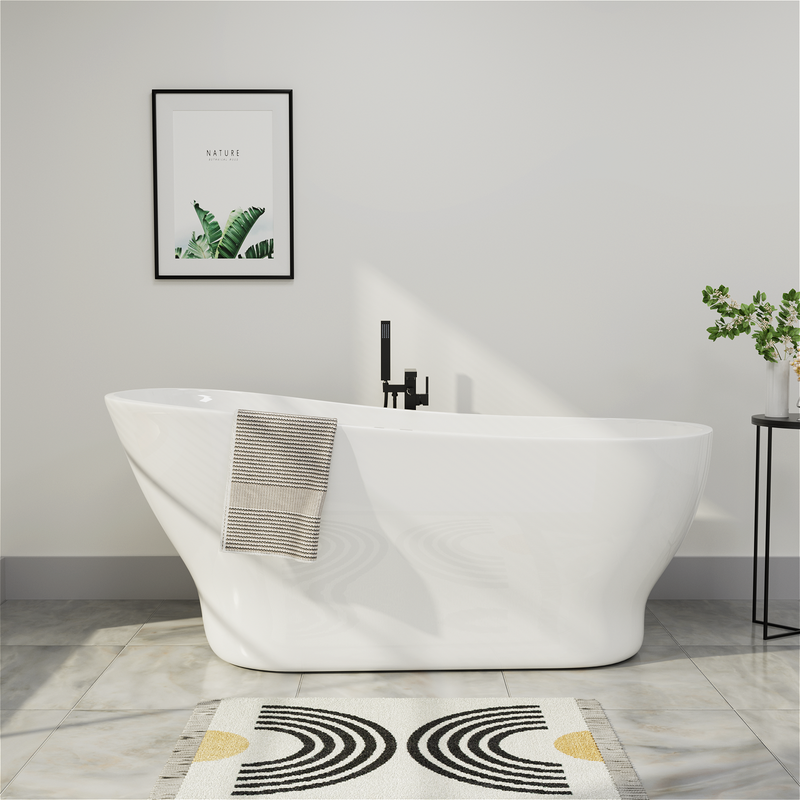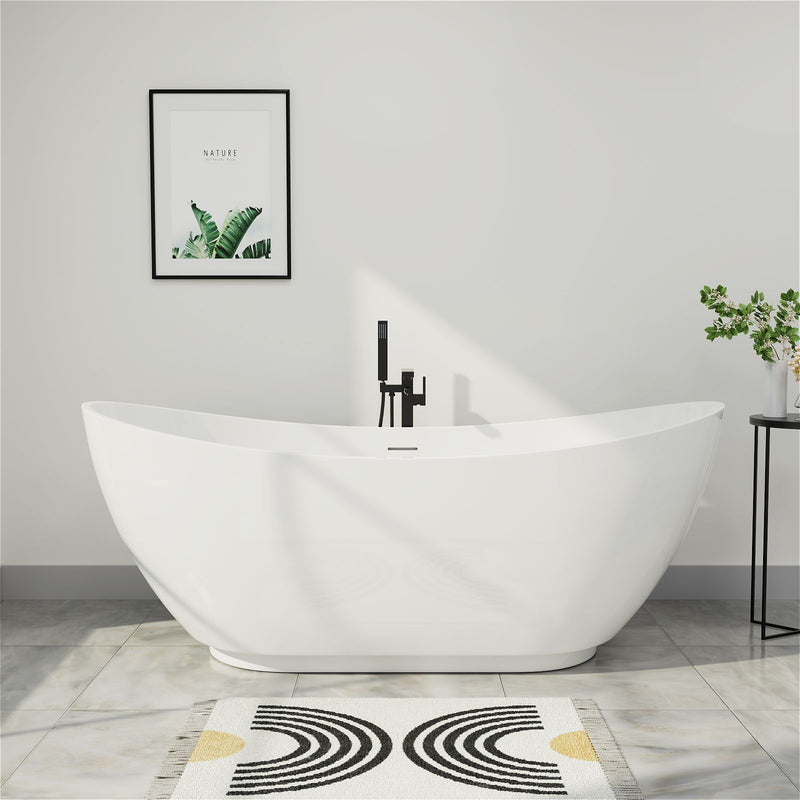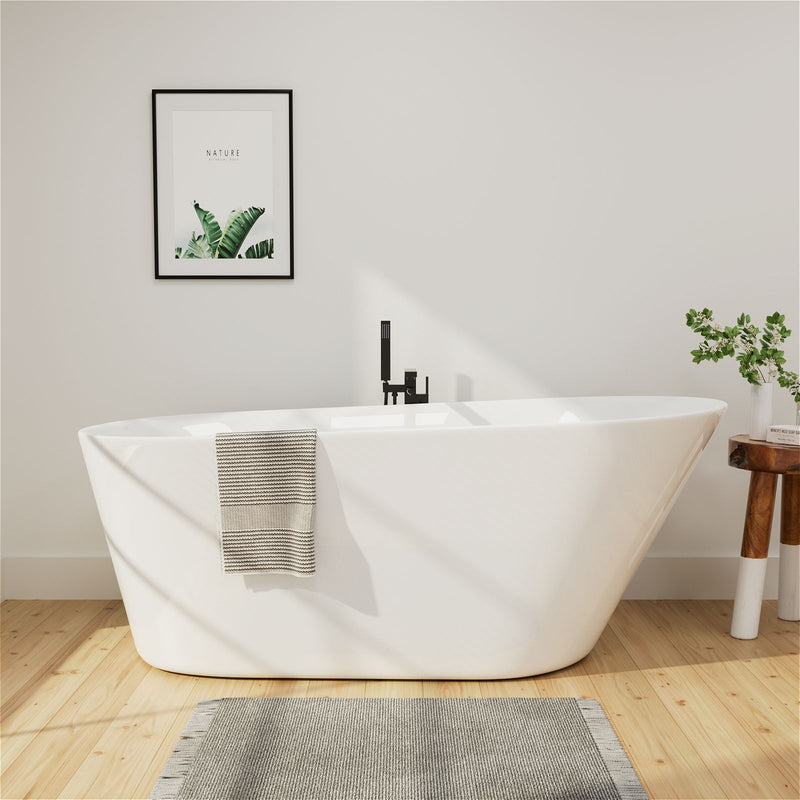
A freestanding bathtub makes a bold statement in any bathroom. Unlike alcove tubs that tuck against walls, these tubs stand alone, serving as a design centerpiece. But behind that elegant look lies a plumbing system that must be planned and executed with precision before the first tile is ever laid.
Plumbing a freestanding tub is fundamentally different from installing a standard alcove tub. The drain is not against a wall where access is easy. The water supply lines must come up through the floor rather than out of a wall. And the entire assembly must be positioned exactly right because once the tub is set, adjusting the plumbing is nearly impossible.
This guide covers every plumbing requirement you need to know before buying or installing a freestanding tub. We will walk through drain rough-in dimensions, floor support calculations, water supply placement, faucet installation, sealing methods, and the most common mistakes to avoid.
Understanding the Drain System
Drain Location and Rough-In Dimensions
The most critical measurement for any freestanding tub installation is the drain location. Unlike alcove tubs with drains positioned near the wall, freestanding tubs have drains that can be centered, offset, or located at the far end of the tub.
Most freestanding tubs require the drain hole to be positioned 10 to 14 inches from the back wall, measured from the wood framing, with a width of 6 to 8 inches. The industry standard distance between a bathtub drain and the wall is approximately 12 inches, which ensures proper installation, functionality, and compliance with building codes.
However, you cannot rely on standard numbers alone. Every freestanding tub model is different, and the manufacturer's specifications always take priority. Before any rough-in work begins, you need to know exactly where the tub's drain outlet is located. This information comes from the tub's installation manual.
Once you have the drain location, mark the center point on the subfloor. This is the spot where the rough-in opening will be cut. Measure carefully. A mistake of even one inch at this stage can make the tub impossible to install.
Access Considerations
One of the biggest challenges with freestanding tubs is that the drain is often positioned far from the wall, making access from underneath difficult or impossible. In many homes, especially second-floor bathrooms and those built on concrete slabs, there is no crawl space or basement ceiling to reach the drain after the floor is finished.
Traditionally, plumbers used a method called stub-out, where they left a pipe extending a few inches above the subfloor, set the tile, then cut the pipe to the guessed height and made the connection blind from underneath. This method is error-prone. If the pipe is too high, the tub sits awkwardly elevated. If it is too low, the connection is poor and may leak. Mistakes are often discovered weeks later, usually after a water stain appears on the ceiling below.
The better approach is to use a specialized rough-in kit designed for freestanding tubs. These kits allow the drain connection to be made from above the finished floor, eliminating the need for ceiling access or blind guesswork. The rough-in box sits flush with or slightly above the finished floor level and accepts the tub's tailpiece directly, creating a watertight seal without requiring access from underneath.
P-Trap and Waste Pipe Sizing
The P-trap must be correctly positioned and secured below the floor line. This U-shaped pipe uses a water seal to prevent sewer gases from entering the home. Most local codes require a P-trap sized at 1.5 or 2 inches, depending on the tub's drain outlet diameter. For residential freestanding tubs, a 1.5-inch trap is common, but larger soaking tubs may require a 2-inch drain.
The rough-in opening in the subfloor must be large enough to accommodate the P-trap and the rough-in box. Measure carefully before cutting. The opening should provide enough clearance for the drain assembly without weakening the subfloor structure.
Drain Alignment and Dry-Fit Testing
Before committing to the installation, perform a dry-fit test. Place the tub in its intended location without applying any sealant or making permanent connections. This allows you to verify that the drain outlet aligns perfectly with the rough-in box in the floor. Also confirm that the faucet spout, if floor-mounted, reaches the center of the tub and that there is adequate clearance around the tub for cleaning and maintenance.
Mark the final tub placement on the floor with painter's tape or a pencil. These marks will guide you when it is time to set the tub permanently.
Floor Support and Structural Requirements
Weight Load Calculations
A freestanding tub filled with water and a bather can be extremely heavy. A typical acrylic alcove tub weighs 70 to 100 pounds empty. In contrast, a cast iron freestanding tub can weigh 300 to 400 pounds empty, and a stone resin tub can weigh 300 to 500 pounds empty. Once filled with 80 gallons of water (adding about 670 pounds), plus the weight of a person, the total load can easily exceed 1,000 pounds.
Most residential floors are designed for a live load of about 40 pounds per square foot plus roughly 10 pounds per square foot of dead load. This works for standard furniture and fixtures but not necessarily for a freestanding tub resting on four small feet. The weight is not spread evenly. It is concentrated on a few small contact points, which can stress the floor structure and cause sagging, cracked tile, or even ceiling damage below.
Joist Assessment and Reinforcement
Before purchasing a freestanding tub, evaluate the floor structure. Key factors include joist size, spacing, span, and condition.
For safe installation, joists should be 2×10 or 2×12, spaced 16 inches on center or closer, with a span of 10 to 12 feet or less. The subfloor should be solid, with no water damage, rot, or excessive notching. If the floor feels bouncy or flexes when you walk on it, that is a red flag that reinforcement is needed.
Reinforcement options include:
- Sistering: Bolting a second identical joist next to the existing one to increase strength.
- Blocking: Installing perpendicular pieces of wood between joists to prevent them from twisting or deforming under load.
- Subfloor reinforcement: Adding a second layer of 0.75-inch exterior-grade plywood to improve weight distribution.
If the combined load of the tub, water, and bather exceeds 800 pounds, structural reinforcement should be assumed unless you have confirmed that the existing floor meets heavy-duty specifications. For second-floor installations or older homes, a structural review by an engineer is strongly recommended before purchase.
Water Supply Lines and Faucet Rough-In
Faucet Type Selection
The faucet you choose determines where the water supply lines must be positioned. Freestanding tubs are typically paired with one of three faucet types.
Floor-mounted faucets rise directly from the floor. The supply lines come up through the subfloor, requiring precise rough-in work before the finished floor is installed. These faucets offer the greatest placement flexibility and create a clean, minimalist look, but they demand accurate positioning because adjustments after the fact are extremely difficult.
Wall-mounted faucets extend from the wall behind the tub. They save floor space but limit how far the tub can be positioned from the wall. The spout must project far enough to reach the center of the tub without creating splashing issues.
Deck-mounted faucets are installed on the tub's rim if the tub is designed with pre-drilled faucet holes. This style conceals the plumbing and works well for tubs that have a wide rim, but it is less common in truly freestanding designs.
Supply Line Placement
For a floor-mounted faucet, the hot and cold water supply lines must be roughed in with precise spacing. Many floor-mount faucets require supply lines on 8-inch centers. The lines should extend upward from the subfloor at the exact location where the faucet base will sit. The water supply lines should be positioned 20 to 22 inches above the floor, though this measurement can vary depending on the tub's height and the faucet's design.
Before closing the floor, confirm that the supply lines are long enough to reach the faucet connections and that they are protected from damage during tile installation. Many installers use flexible braided supply lines for the final connection, which makes positioning easier and reduces the risk of stress on rigid pipes.
Hot and Cold Orientation
Double-check that the hot and cold supply lines are correctly oriented before setting the tub. Reversing them means the faucet handles will work backward, which is frustrating to discover after the installation is complete. Some floor-mount faucets allow the supply connections to be crossed during installation, but many do not. It is much easier to verify orientation before the finished floor is installed.
Sealing, Leveling, and Leak Testing
Leveling the Tub
A freestanding tub must sit perfectly level to drain properly and prevent stress on the plumbing connections. Use a spirit level to check the tub along its length and width. If the floor is uneven, use adjustable feet or non-compressible shims to level the tub. Many freestanding tubs come with built-in leveling feet that can be turned to raise or lower specific corners.
Do not skip this step. A tub that is not level will drain slowly, leave standing water, and may put uneven stress on the drain connection, leading to leaks over time.
Proper Sealant Selection
When sealing the tub to the floor, use a high-quality silicone sealant. Specifically, use clear 100 percent silicone sealant. Do not use plumber's putty. Plumber's putty contains oils that can stain certain stone and acrylic surfaces and may degrade over time in contact with the tub's base.
Apply the silicone bead around the perimeter of the tub base, leaving a small gap at the back or side to allow any trapped moisture to escape. Smooth the bead with a finger or a profiling tool to create a clean, watertight seal.
Leak Testing Before Final Use
Before calling the installation complete, perform a leak test. Fill the tub partway with water and let it sit for 15 to 20 minutes. Inspect all connections: the drain tailpiece connection to the rough-in box, the P-trap joints, and the faucet supply line connections. Also check the silicone seal around the tub base for any gaps.
If any leaks are found, drain the tub, dry the affected area, and correct the issue before using the tub regularly. Catching a leak at this stage is simple. Fixing it after the bathroom is fully finished and the tub is in daily use is much more difficult.
Common Installation Mistakes to Avoid
Ignoring Structural Checks
Skipping a structural assessment before buying a heavy cast iron or stone resin tub is a common and costly mistake. Many homeowners assume that any floor can handle any tub. This is not true. A filled freestanding tub can weigh over 1,000 pounds, and older homes or second-floor bathrooms often lack the necessary support. Always evaluate the floor before purchasing.
Guessing Drain Measurements
Freestanding tub drains require precise placement. Guessing or relying on rough estimates leads to misalignment, which forces the tub to be shifted off-center or requires costly plumbing rework. Measure the drain location from the tub's manual, mark it on the subfloor, and verify before cutting any holes.
Using the Wrong Sealant
Plumber's putty is not appropriate for sealing freestanding tubs to finished floors. It can stain natural stone and some acrylic finishes, and it does not provide the long-term flexibility and water resistance of silicone. Always use 100 percent silicone sealant.
Not Dry-Fitting First
Skipping the dry-fit step is a gamble. Without placing the tub in its intended location and checking alignment, you risk discovering that the drain is off by an inch or the faucet does not reach the center of the tub after everything is already set. Dry-fitting takes 15 minutes and prevents hours of rework.
Forgetting Service Access
Freestanding tubs need periodic maintenance. The pump, drain connections, and supply lines may need to be accessed in the future. Do not seal the tub to the floor in a way that makes removal impossible. Leave a small gap at the back or side of the silicone bead, or use a removable panel if the tub design allows.
FAQs
How far should the drain be from the wall for a freestanding tub?
The drain should typically be 10 to 14 inches from the back wall, measured from the wood framing. However, the exact distance depends on the tub model. Always check the manufacturer's specifications before roughing in the drain.
Do I need to reinforce my floor for a freestanding tub?
If the combined weight of the tub, water, and bather exceeds 800 pounds, floor reinforcement is usually necessary. Cast iron and stone resin tubs almost always require reinforcement. Lightweight acrylic tubs may not, but a structural check is still recommended, especially for second-floor installations.
Can I install a freestanding tub on a concrete slab?
Yes. On a concrete slab, you will need to cut the slab to run the drain and water supply lines. This requires a concrete saw and careful planning. A rough-in kit designed for above-floor connections is essential because there is no access from underneath.
What is the best way to connect the drain without ceiling access?
Use a rough-in kit designed for freestanding tubs. These kits include a box that sits flush with the finished floor and accepts the tub's tailpipe from above, eliminating the need to work from underneath the tub.
How much clearance do I need around a freestanding tub?
Leave at least 4 to 6 inches of clearance on all sides for cleaning and access. On the faucet side, 6 inches of service access is recommended. In front of the tub, allow enough space to step in and out safely without squeezing.
What type of sealant should I use for a freestanding tub?
Use clear 100 percent silicone sealant. Do not use plumber's putty, as it can stain surfaces and may not provide a long-term watertight seal.
Can I use flexible supply lines for a floor-mount faucet?
Yes. Flexible braided supply lines are easier to work with than rigid pipes and reduce the risk of stress on the connections. Make sure the lines are rated for hot water and long enough to reach the faucet inlets.
How do I level a freestanding tub on an uneven floor?
Use the tub's adjustable feet if available, or place non-compressible shims under the feet. Check level along the length and width with a spirit level. Do not use compressible materials like rubber or foam, as they will settle over time.
What is a rough-in kit for a freestanding tub?
A rough-in kit is a specialized drain assembly that allows the tub to be connected to the waste line without access from underneath. The kit includes a box that is installed below the finished floor and a tailpipe that drops into the box from above.
Can I install a freestanding tub myself?
Basic installation may be possible for experienced DIYers, but the plumbing rough-in requires precise measurements and knowledge of local building codes. For most homeowners, hiring a licensed plumber is recommended, especially for heavy tubs or complex drain configurations.
Conclusion
Installing a freestanding bathtub requires more planning than a standard alcove tub. The drain location must be measured precisely, the floor structure must be assessed for the heavy load, and the water supply lines must be positioned exactly where the faucet will sit. Unlike alcove tubs, freestanding tubs leave no room for adjustment after the fact. Every measurement must be right before the finished floor is installed.
Start by selecting the tub and obtaining its installation manual. Mark the drain center on the subfloor and install the rough-in kit. Assess the floor joists and reinforce them if needed. Position the water supply lines for the faucet, then set the tub, level it, seal it, and test for leaks.
With careful planning and attention to detail, a freestanding tub can be installed to provide years of reliable use. Rushing the rough-in or skipping structural checks leads to costly mistakes. Take the time to do it right, and your freestanding tub will serve as a beautiful and functional centerpiece in your bathroom for decades.