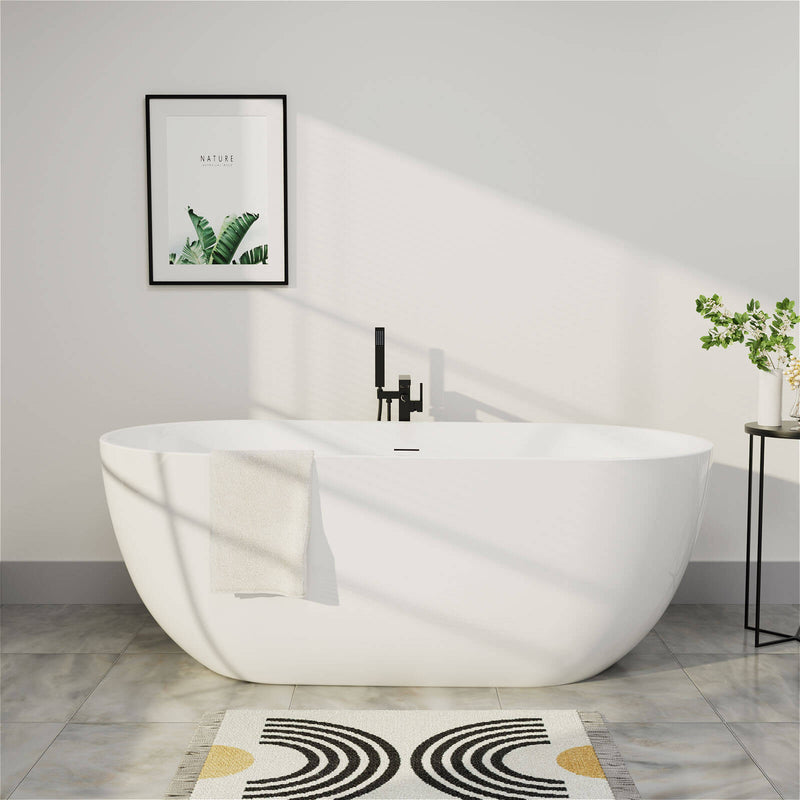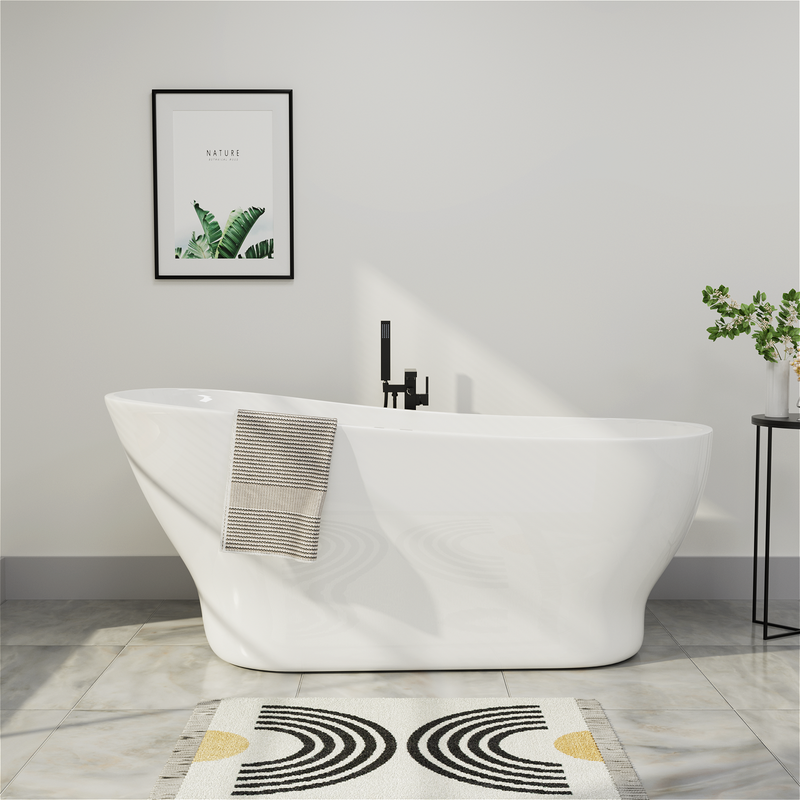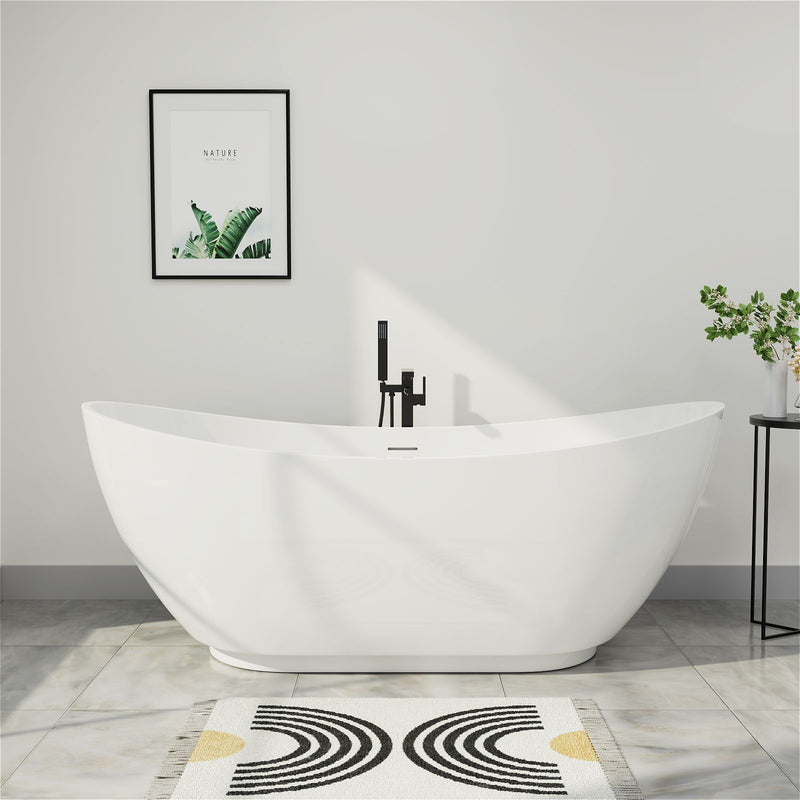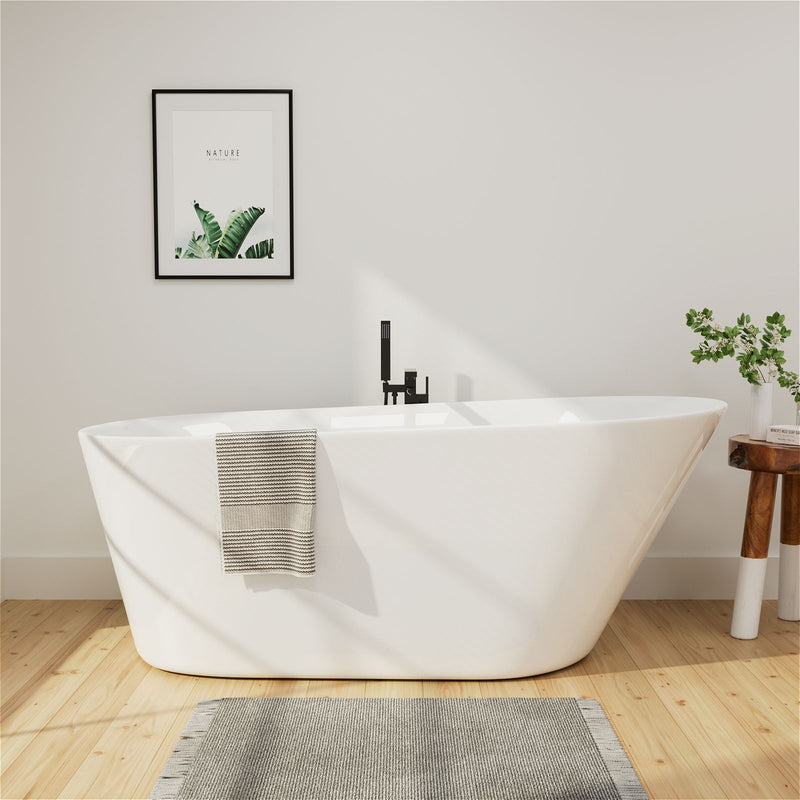
Choosing a faucet for your freestanding bathtub is more than picking a finish that matches your hardware. The mounting style affects everything from how easy the faucet is to clean to how much floor space you need to keep clear. The two main options are wall mount tub faucets and floor mount tub faucets. Each has distinct advantages and trade-offs.
A wall mount tub faucet attaches directly to the wall behind the tub. It saves floor space and creates a clean look, but it requires precise placement and a sturdy wall structure. A floor mount tub faucet stands independently next to the tub on its own base. It offers more flexibility in placement and a dramatic visual presence, but it takes up floor space and requires plumbing through the floor.
This guide compares both types across several important factors: installation complexity, space requirements, cleaning and maintenance, design flexibility, cost, and durability. By the end, you will know which style makes sense for your bathroom.
Understanding Wall Mount Tub Faucets
How Wall Mount Faucets Work
A wall mount tub faucet extends horizontally from the wall behind or beside the bathtub. The water supply lines run inside the wall, and the faucet body is attached to a rough-in valve or drop-ear elbow secured to wall studs. The spout projects outward, and the water stream drops vertically into the tub.
Wall mount faucets are commonly used in alcove tub installations where the tub sits against a wall. They can also work with freestanding tubs placed close to a wall, as long as the spout is long enough to reach over the tub rim.
Installation Requirements
Installing a wall mount tub faucet requires access to the wall cavity. This is straightforward during new construction or a gut renovation when walls are open. In a finished bathroom, installation may involve cutting into drywall or tile to run supply lines and secure the mounting hardware.
The faucet must be mounted at the correct height. The spout outlet should sit 6 to 10 inches above the tub rim to prevent splashing. The supply lines must be positioned precisely because there is no adjustment once the wall is closed. Many plumbers recommend using a drop-ear elbow with a 1/2-inch female thread that screws directly into the wall and provides a stable mounting point.
The wall itself must be strong enough to support the faucet. Solid blocking between studs is essential. If you mount a heavy brass faucet to drywall alone, it will pull loose over time. For tile walls, the faucet trim plate must sit flush against the finished surface, which requires precise rough-in depth.
Advantages of Wall Mount Faucets
Wall mount tub faucets free up floor space. There is no base on the floor to clean around, which makes mopping and sweeping easier. This is especially valuable in small bathrooms where every inch counts.
Wall mount faucets also create a cleaner visual line. Without a floor base, the eye moves from the tub to the faucet without interruption. This minimalist look suits modern and contemporary bathrooms.
Because the faucet is fixed to the wall, there is no risk of tipping or wobbling. The connection is solid and secure. Wall mount faucets are also typically less expensive than floor mount models because they use less material and simpler construction.
Disadvantages of Wall Mount Faucets
The biggest limitation is placement. The tub must be positioned near a wall, and the faucet spout must be long enough to reach the center of the tub. If the tub is more than 12 inches from the wall, most wall mount faucets will not reach.
Installation is more complex in finished bathrooms. Running new supply lines inside an existing wall may require cutting into tile or drywall, then patching and refinishing. This adds labor cost and can be disruptive.
Wall mount faucets also limit your ability to change the tub position later. If you decide to move the tub, you will need to relocate the plumbing or install a new faucet.
Understanding Floor Mount Tub Faucets
How Floor Mount Faucets Work
A floor mount tub faucet, also called a freestanding faucet, stands independently on the floor next to the bathtub. The base sits on the finished floor, and the water supply lines come up through the floor inside the base. The faucet body rises vertically, then arches over to position the spout above the tub.
Floor mount faucets are designed specifically for freestanding bathtubs. They work with tubs placed anywhere in the room, not just against a wall. The base covers the rough-in connections, creating a clean, finished look.
Installation Requirements
Installing a floor mount tub faucet requires precise rough-in before the finished floor is installed. The hot and cold water supply lines are typically roughed in on 8-inch centers. The lines must extend above the subfloor so they can be connected inside the faucet base.
The floor must be perfectly level. If the floor slopes, the faucet will lean. Adjustable leveling feet on some models help compensate, but major unevenness requires floor correction.
Because the supply lines come up through the floor, access underneath is essential. In a basement or crawl space, this is manageable. On a concrete slab, you may need to cut the slab to run new lines, which adds significant cost.
Advantages of Floor Mount Faucets
Floor mount tub faucets offer the greatest placement flexibility. You can position the tub anywhere, not just against a wall. This is essential for freestanding tubs placed in the center of the room or at an angle.
The visual impact of a floor mount faucet is dramatic. The tall, arching spout becomes a design focal point. Many floor mount faucets are available in elegant styles with curved necks and polished finishes.
Floor mount faucets are also easier to clean around because there is no wall connection to worry about. You can wipe the floor underneath the base without obstruction.
Because the faucet is not attached to the wall, you can change the tub position or replace the faucet with a different style without opening walls. The rough-in remains the same as long as the base covers the connections.
Disadvantages of Floor Mount Faucets
Floor mount tub faucets take up floor space. The base typically measures 2 to 4 inches in diameter, and you need clearance around it for cleaning. In a very small bathroom, this can be a problem.
Installation is more expensive, especially on concrete slabs. Cutting into a slab to run new supply lines is a major job. Even in wood-framed floors, running lines to the exact rough-in location requires careful planning.
Floor mount faucets are generally more expensive than wall mount models. The taller construction and more complex base add to the cost. Expect to pay 30 to 50 percent more for a comparable floor mount faucet.
The exposed vertical pipe can also be a target for bumps and knocks. In a busy family bathroom, someone might accidentally kick the base or catch a towel on the spout.
Key Differences at a Glance
Space Efficiency
Wall mount faucets win on space efficiency. They keep the floor clear and work well in tight layouts. Floor mount faucets require dedicated floor space around the tub.
Installation Complexity
Wall mount faucets are simpler to install in new construction but more disruptive in finished bathrooms. Floor mount faucets require floor penetration and precise rough-in but can be added without opening walls.
Placement Flexibility
Floor mount faucets offer complete placement freedom. Wall mount faucets require the tub to be near a wall with a spout long enough to reach.
Cost
Wall mount faucets are generally less expensive. Floor mount faucets cost more due to taller construction and more material.
Cleaning and Maintenance
Wall mount faucets are easier to clean around because there is no floor base. Floor mount faucets have a base that can collect dust and water spots.
Durability
Both types are durable when properly installed. Wall mount faucets are less likely to be bumped. Floor mount faucets are exposed but typically made of solid brass.
How to Choose Between Wall Mount and Floor Mount
Consider Your Tub Placement
If your freestanding tub sits against a wall or in an alcove, a wall mount faucet is a practical and cost-effective choice. Measure the distance from the wall to the center of the tub. The spout reach must cover that distance. Most wall mount faucets have a spout reach of 8 to 12 inches. If your tub is more than 12 inches from the wall, you may need a floor mount faucet.
If your tub is in the center of the room or away from walls, a floor mount faucet is the only option that makes sense. You cannot run supply lines through the air.
Evaluate Your Floor Structure
Floor mount faucets require access underneath the floor. If your bathroom is on a concrete slab, installing a floor mount faucet means cutting concrete. This is expensive and best done during a full renovation. If you have a basement or crawl space underneath, floor mount installation is much simpler.
Wall mount faucets require access to the wall cavity. If your bathroom has open framing, installation is straightforward. If walls are finished with tile, expect additional labor for cutting and patching.
Think About Your Cleaning Routine
If you hate getting down on your hands and knees to wipe around floor fixtures, a wall mount faucet will make your life easier. There is no base on the floor to collect dust, hair, and water spots. A quick wipe of the wall and the faucet body is all you need.
If you do not mind occasional floor cleaning around a base, a floor mount faucet adds a luxurious touch that many homeowners love.
Match Your Bathroom Style
Wall mount faucets work well in modern, minimalist, and transitional bathrooms. The clean lines and absence of a floor base keep the look sleek. Floor mount faucets make a statement in traditional, vintage, and contemporary bathrooms. The tall arching spout draws the eye and anchors the room.
Plan for Future Changes
If you think you might move the tub or change the faucet style in the future, a floor mount faucet offers more flexibility. The rough-in remains the same as long as the base covers the connections. You can swap one floor mount faucet for another without opening walls.
Wall mount faucets lock you into a specific position. Changing the faucet later is easy, but moving it requires opening the wall.
Common Installation Mistakes
Wall Mount Mistakes
One common error is mounting the faucet too low. The spout should clear the tub rim by 6 to 10 inches. If the faucet is too low, water splashes back. If it is too high, you get a waterfall effect.
Another mistake is failing to add blocking behind the wall. Drywall alone cannot support a heavy brass faucet. Add 2x6 blocking between studs at the correct height before the wall is closed.
A third mistake is incorrect rough-in depth. The faucet trim must sit flush against the finished wall surface. If the rough-in valve is set too deep or too shallow, the trim will not fit correctly.
Floor Mount Mistakes
The most common floor mount mistake is incorrect rough-in placement. Measure the faucet base position relative to the tub before the floor is finished. Mark the center point. If you are off by even an inch, the faucet will not align with the tub.
Another mistake is forgetting to level the faucet base. An unlevel floor causes the faucet to lean, which looks bad and may affect water flow. Use the faucet's adjustable feet or add floor leveling compound.
A third mistake is using the wrong sealant. Apply 100 percent silicone around the base after installation to prevent water from seeping under the floor. Do not use plumber's putty, which can stain some floor materials.
FAQs
Which is better, a wall mount or floor mount tub faucet?
Neither is universally better. Wall mount faucets save floor space and cost less. Floor mount faucets offer placement flexibility and a dramatic look. Choose based on your tub position, floor structure, and design preferences.
Can I use a wall mount faucet with a freestanding tub?
Yes, as long as the tub is placed close to a wall and the spout reach is long enough to reach the center of the tub. Measure carefully before buying.
How high should a wall mount tub faucet be installed?
The spout should be 6 to 10 inches above the tub rim. Measure from the finished floor to the tub rim, add 6 to 10 inches, and install the rough-in valve at that height.
Do floor mount faucets require special floor reinforcement?
Most floor mount faucets weigh 10 to 20 pounds and do not need reinforcement. However, the supply lines must be secured properly. The floor itself must be level.
Can I install a floor mount faucet on a concrete slab?
Yes, but it requires cutting the slab to run supply lines. This is a major job best done during new construction or a full renovation. Expect to pay significantly more for this work.
Which type is easier to clean?
Wall mount faucets are easier to clean because there is no floor base. Floor mount faucets have a base that collects dust and water spots, requiring occasional wiping.
Are floor mount faucets more expensive?
Yes. Floor mount faucets typically cost 30 to 50 percent more than comparable wall mount models due to taller construction and more material.
What is the standard spout reach for a wall mount faucet?
Most wall mount faucets have a spout reach of 8 to 12 inches. Measure from the wall to the center of your tub to ensure the spout will reach.
Can I convert a wall mount faucet to floor mount?
No. The plumbing rough-in and faucet construction are completely different. You would need to install an entirely new faucet and relocate supply lines.
Which type lasts longer?
Both types can last decades with proper installation and quality materials. Brass faucets are the most durable. Avoid plastic components.
Conclusion
Choosing between a wall mount and floor mount tub faucet comes down to your bathroom's layout, your budget, and your design preferences. Wall mount faucets are practical, space-saving, and less expensive. They work well when the tub sits against a wall and you want a clean, minimalist look. Installation is simpler in new construction but can be disruptive in finished bathrooms.
Floor mount faucets offer placement freedom and a dramatic, elegant presence. They are the only choice for freestanding tubs placed away from walls. Installation is more complex and expensive, especially on concrete slabs, but the visual impact is hard to beat.
Measure your tub position carefully before making any decisions. Consider how much floor space you have, whether you can access the wall or floor for plumbing, and what style fits your bathroom. With the right information, you can choose a faucet that looks beautiful, works reliably, and serves you well for years.